The gig economy, platform work, and social policy: food delivery workers’ occupational welfare dilemma in Hong Kong
Nguồn và giấy phép
- Tên bài
- The gig economy, platform work, and social policy: food delivery workers’ occupational welfare dilemma in Hong Kong
- Tác giả
- Tat Chor Au-Yeung, Chris King-Chi Chan, Cham Kit Keith Ming, và cộng sự
- Tạp chí
- Journal of Social Policy, 2024
- DOI
- 10.1017/s0047279423000673
- Giấy phép
- CC BY 4.0
Đã chuyển định dạng từ bản gốc; nội dung không thay đổi.
Xem bản gốcARTICLE

The gig economy, platform work, and social policy: food delivery workers' occupational welfare dilemma in Hong Kong
Tat Chor Au-Yeung¹ , Chris King-Chi Chan² , Cham Kit Keith Ming¹ and Wing Yin Anna Tsui³
1 Department of Sociology and Social Policy, Lingnan University, Hong Kong, ² School of Business and Management, Royal Holloway, University of London, Egham, UK and ³ Department of Sociology, University of Hong Kong, Hong Kong
Corresponding author: Tat Chor Au-Yeung; Email: tatchorauyeung@LN.edu.hk
(Received 15 March 2023; revised 5 November 2023; accepted 7 December 2023; first published online 04 January 2024)
Abstract
Previous literature suggests that the gig economy and platform work pose challenges to social policy, including the welfare entitlement issues caused by workers' ambiguous occupational status. Focusing on the government's regulatory role, this study investigates platform workers' occupational welfare (OW) by conducting in-depth interviews with forty-six food delivery workers in Hong Kong. The evidence reveals workers' occupational risks resulting from platforms' algorithmic devices and the misclassification of independent contractors. The denied access to private occupational pensions was considered acceptable by workers because of the perceived irrelevance of OW. While interviewees emphasised time-based flexibility as a key intangible benefit, the shifting business costs to self-employed workers was highlighted as a disadvantage. A policy dilemma appears between strengthening state regulation/protection and maintaining workers' temporal autonomy. Arguably, the platformisation of work is translated into the gigification of OW, disentitling platform workers' employer-provided welfare and labour protection. Platforms possess monopolising power over workers, the state displays weak regulatory power to monitor platforms, and workers' occupational citizenship is undermined by the government's minimal intervention. This study contributes to the literature by linking OW to platform work and revealing how the gig economy reshapes social policy, empirically offering a worker-centred analysis of OW in Hong Kong.
Keywords: gig economy; platform work; self-employment; occupational welfare; digital technology; labour protection
Introduction
The digitisation and platformisation of work pose many challenges to social policy and welfare states (Koster, 2023), including the issues about workers' welfare entitlements, labour rights, and the social protection coverage, caused by the
© The Author(s), 2024. Published by Cambridge University Press. This is an Open Access article, distributed under the terms of the Creative Commons Attribution licence (https://creativecommons.org/licenses/by/4.0/), which permits unrestricted re-use, distribution, and reproduction in any medium, provided the original work is properly cited.
ambiguous occupational status and power asymmetries between platforms and workers. How the existing social policy framework could address these problems remains a question. Platform work is defined as on-demand labour activities mediated by digital platforms on both local and global bases (Drahokoupil & Piasna, 2022; Vallas & Schor, 2020; Woodcock & Graham, 2020). It has emerged in the gig economy, which involves fragmented work tasks performed via a digitised labour market. Given the changing organisation of work, controversies focus on platforms' dominance over workers regarding deprived social and labour rights. This study employs the concept of occupational welfare (OW), benefits primarily offered by employers and regulated by the state (Brunsdon & May, 2019; Farnsworth, 2018; Titmuss, 1958), to examine the institutionalised relationships between workers, digital platforms, and social policy in the gig economy. The research is guided by two research questions: (1) How do platform workers experience and understand their OW? (2) What challenges do platform work and the gig economy pose to social policy? In this study, in-depth interviews with forty-six food delivery workers were conducted to investigate their experiences and perceptions of OW in Hong Kong (HK). The liberal labour market and residual welfare systems in HK provide an extreme case study to analyse platform work and OW, with minimal state intervention (Au-Yeung & Qiu, 2022; Kim, 2015). The findings reveal platform workers' occupational risks and OW preferences. Informed by interviewees' experiences, a policy dilemma exists between strengthening government regulation and maintaining workers' relative autonomy. Arguably, the platformisation of work has been translated into the gigification of OW, leading to the disentitlement of platform workers' employer-provided benefits. Overall, platforms possessed monopolising and contractual power over workers, the state displayed weak regulatory power and enforcement to monitor platforms, and workers' occupational citizenship was undermined by the government's minimal intervention. This study conceptually contributes to the literature by linking OW to platform work and examining how the gig economy reshapes social policy. It also empirically provides evidence via a worker-centred analysis of OW and platform work in the East Asian context.
There is a growing body of literature on digitisation, technological changes, and welfare states in Western contexts (Busemeyer et al., 2022; Greve, 2022; Pulkka & Simanainen, 2022), suggesting that the introduction of artificial intelligence, big data, algorithms, and machine learning restructures social policy and service delivery (Desiere & Struyven, 2021; Iversen & Rehm, 2022; James & Whelan, 2022). Henman (2022) has coined the term 'digital social policy' to depict a paradigm in which policy content, implementation, and governance are mediated through digital technologies. While the digitisation for technological innovation and inclusive growth is internationally supported (Silva, 2022), new forms of inequality have appeared along with the policy agenda of marketisation (Considine et al., 2022; Schou & Pors, 2019) and the digitised transformation of work (Greve, 2022). The rise of online platforms as intermediaries between requesters and providers of labour services has received increasing attention and poses new challenges to welfare systems and homecare services (Hamblin et al., 2023; Schoukens, 2020; Sieker, 2022).
In contrast to the current literature emphasising the classification of platform work and access to social security, this study draws on the concepts of OW and adopts a relational approach to examine how workers dynamically position themselves in relation to platforms and the government. The following sections first review the relationship between platform work, the gig economy, and social policy, followed by the concepts of OW as a framework to examine the triangular relationship between platforms, workers, and the state. After discussing the HK context and research methods, the key findings and analytical themes are presented. Drawing broader implications for social policy, the discussion reconceptualises the gigification of OW under the platformisation of work.
The gig economy, platform work, and social policy
While neoliberal reforms de-standardised labour market institutions and employment relations in the post-industrial economy (Kalleberg, 2018), digitisation and platform work have generated new forms of precarity experienced by workers (Eichhorst et al., 2022; Parwez, 2023; Schoukens, 2020), given platforms' monopolising power via network effects and lean production (Vallas & Schor, 2020). Greve (2022) suggests that the digitised restructuring of employment may worsen the quality and security of work; however, the risk of under-reported incomes may hurt the financing of contributory social insurance and tax revenue of the welfare state (Sieker, 2022). Additionally, existing income protection schemes do not fit the platform work's character of multiple jobholding and income irregularity (Gregory, 2017; Jerg et al., 2021; Millar & Whiteford, 2020). Hence, occupational citizenship and work-related welfare systems face growing pressure in relation to workers' fragmented mini-tasks and income in the gig economy (Behrendt et al., 2019; Schoukens, 2020).
Previous literature has focused on the coverage of social protection and platform workers' welfare entitlement. Despite platforms' dominant control in the digitally mediated labour process, firm–worker relations are constantly framed by platforms as an 'outsourced wage-earnership' in the absence of employers' responsibility (Schoukens, 2020). This results in the misclassification of self-employment, which prevents platform workers' access to labour and social protection (Sieker, 2022). Workers with a stronger reliance on platforms as their main income source possess less bargaining power against platforms (Schor et al., 2020) associated with longer working hours and lower average hourly pay. Overall, in subordinated employment relations, platform workers are deprived of occupational benefits and labour rights (Joyce et al., 2019; Schoukens, 2020), such as contributory pensions, sickness benefits, accident insurance, and paid leave. In the European context, social democratic regimes are more likely to protect platform workers by providing universal pensions, whilst corporatist regimes maintain the dualist model, and liberal regimes mainly rely on means-tested benefits (Jerg et al., 2021). Sieker (2022) posits that corporatist regimes introduce more inclusive policy responses via social dialogue and collective agreements, however, the liberal model leaves labour disputes to legal and legislative actions. Given the prevailing minimum thresholds of many welfare systems, platform workers' gig work may be excluded from joining social security schemes, weakening solidaristic relations (Schoukens, 2020).
Apart from the financing and coverage of social protection, the regulatory and legal role of the state in balancing platform firms' power and practices has been mentioned (Inversi et al., 2023; Stewart & Stanford, 2017). Busemeyer and Colleagues (2022) highlight the regulatory difficulties of the welfare state in response to the blurred legal boundaries of gig work and platforms' evasive strategies for taxation (Sieker, 2022). Nevertheless, the regulatory politics of digital platforms have recently shifted from merely promoting market competition to stronger socioeconomic regulation as a prescriptive restriction on platforms' misbehaviour (Cioffi et al., 2022). Platform workers' social and labour protection in rich democracies, therefore, is subject to change according to the dynamics between labour, business, and the state.
Accordingly, both social provision and platform regulation are relevant to the institutionalisation of platform work. While burgeoning national and comparative studies portray platform work and social protection, there is an over-emphasis on legal settings, labour classification, and benefit design (Daugareilh, 2021; De Stefano, 2015). It is essential to identify the coverage gap to incorporate platform workers into the current social protection systems (Behrendt et al., 2019). However, the investigation of the social policy–platform work nexus should go beyond the matter of categorisation and reconceptualise the (de)coupling of platform work from broader social institutions. Workers' encounters with social policy in relation to platform firms (Joyce et al., 2019), alongside their epistemic and normative consideration regarding claiming welfare (Ravenelle et al., 2021), are currently understudied. Consequently, platform work should not be regarded as 'precarious as usual', and more attention should be provided to platform workers' voices for research and policymaking (Schoukens, 2020; Wilkinson et al., 2022). The next section presents an occupational welfare framework as a relational approach to platform workers' experience and social policy.
Linking occupational welfare to platform work and workers
The concepts of OW can be expanded and applied to analyse the interplay between workers, platforms, and the state. In contrast to public and fiscal welfare, OW was coined by Titmuss (1958) as a form of collective intervention that meets social needs through administrative and institutional means and is based on the performance and status of individual employees. OW generally refers to the monetary and nonmonetary benefits primarily provided by employers (Brunsdon & May, 2019; Farnsworth, 2018; Mann, 2009; Natali et al., 2018), including earnings-related pensions, child allowances, residential accommodation, health insurance, and severance payments (Ozkan, 2020). Brunsdon and May (2019) suggest that OW can serve the function of risk pooling against occupational risks, including industrial accidents, retirement, sickness, and unemployment. OW is two-fold (Farnsworth, 2018). It can be mandated by state regulation as employers' liability to provide employees with health and safety protection, pension contributions, work accident insurance, and statutory sick pay (Kangas, 2021; Pavolini & Seeleib-Kaiser, 2018).
OW can also be voluntary and based on sectoral characteristics, depending on contractual and collective agreements between employers and employees. In addition to non-wage benefits (Sinfield, 1978), OW also appears as intangible benefits, such as dental services, training, and workplace autonomy (Farnsworth, 2018). In principle, OW can benefit both workers' needs and employers' interests in retaining employees or boosting business performance; on the other hand, OW represents a site of conflict structurally determined by the centralisation of an industry or firm in a market, unionisation of workers, and macroeconomic conditions.
Employment status constitutes eligibility for OW in industrial capitalism (Greve, 2018). This moves beyond a state-centric account of welfare and connects social policy to employment relations and human resource management (Brunsdon & May, 2019; Hassel, 2020), wherein the entitlement and distribution of OW are driven by the relative strength between labour, capital, and the state (Kristal, 2017). Greve (2018) suggests that corporatist systems, wherein collective bargaining takes place, tend to allow stronger OW for core workers in the primary labour market. However, it may lead to the risk of dualisation between insiders and outsiders cutting across gender, skills, contracts, industries, and firm size (Natali et al., 2018). Thus, OW is more likely to have wider coverage in coordinated industrial relations and organised corporatist regimes (Riva & Rizza, 2021), while weaker state regulation in liberal market economies, with non-institutionalised bargaining and fragmented employment relations, results in the exclusion of low-wage workers from OW. The lack of collective bargaining structures and regulatory power makes OW contingent on employers' discretionary arrangements on a voluntary basis.
The regulation and provision of OW, therefore, embodies a triangular relationship between workers, employers, and the state, characterised by the 'industrial' or 'occupational' citizenship (Budd, 2011; Marshall, 1950; Standing, 2009). Linked to employment status and performance, OW involves a social contract negotiated between employers and employees or unions and is governed by the state as a legalised norm (Kangas, 2021). Labour rights and their entitlements are institutionalised by the state in employment relations, protecting labour from a pure commodity and rebalancing the inherent unequal relations between labour and capital (Offe, 1985). For example, employment protection legislation, such as OW, regulated by the state and implemented by firms, defines the flexibility of the labour market and the costs of dismissal (Hassel, 2020).
Under the digitisation of labour market, OW, as the non-wage costs of standard employment, could be minimised by private platforms that informalise employment relations with workers. However, workers' need for protection may pressure the government to respond (Cioffi et al., 2022; Sieker, 2022). Inversi and Colleagues (2023) contend that there is continual negotiation for platform workers to redefine OW and employment standards in the gig economy. Governments' regulative power may remake some rules of labour commodification and forms of OW. Labour market transformation and the emergence of self-employment have set a new scene and posed new challenges to OW (Kangas, 2021; Natali et al., 2018), including platform-related risks and accidents induced by algorithms' real-time monitoring (Kim et al., 2022). The multiple facets of OW call for a more relational understanding of social policy from platform workers' perspectives (Brunsdon & May, 2019), adding value to the current instrumental analysis of social protection coverage.
Platform work and occupational welfare in HK's policy context
Despite its growing prevalence, platform work and the gig economy still receive inadequate attention in HK (Chan et al., 2022). With limited state intervention, employment relations in HK have been generally portrayed as uncoordinated and under-institutionalised (Chu & Kong, 2022), and are characterised by the lack of collective bargaining structures, minimal employment protection legislation, and low dismissal costs. In addition to weak unionisation and labour representation, labour rights regulation and OW are relatively underdeveloped among precarious workers (Au-Yeung & Qiu, 2022). The Mandatory Provident Fund (MPF) represents the core monetary OW of employees as an occupational private pension scheme in HK, which requires 5 per cent of the monthly salary contributed by both employers and employees. While the coverage of the MPF for all employees is high, as regulated by legislation, it only entails individual accounts of private savings and financial investment (Au-Yeung & Chan, 2020).
According to the Employment Ordinance and the 'continuous contract of employment' (Labour Department, 2023), there are three layers of employment relations that define the divisions of OW. The core layer refers to standard workers who are employed by the same employers for at least four weeks and more than 18 hours each week. The second includes non-standard workers who do not meet the criteria of a continuous contract to entitle some of major OW benefits, including paid leave, severance, and long service payment. However, these part-time and temporary workers are still covered by the statuary minimum wage, MPF, labour compensation and insurance, and employment protection, given that employment relationships are involved. The last layer comprises both independent and dependent self-employed workers who cannot access any OW. The so-called dependent self-employed workers occasionally contain false self-employment that is unlawfully defined by employers. Platform workers in HK are widely defined as independent contractors without any entitlements to OW (Chan et al., 2022). The domains of mandatory and voluntary OW for employees in HK are summarised in Figure 1.
The rise of platform work during the pandemic engenders disputes over labour protection, OW, and racial discrimination (Leung, 2022). While there are no official demographics data regarding platform workers in HK, it is estimated that about 20,000 workers registered for food delivery platforms in 2021, and most of them were male with multiple income sources (Chan et al., 2022). Compared to other non-platform precarious work, food delivery platforms display stronger likelihood of monopolisation and false self-employment within the sector (Au-Yeung & Qiu, 2022). Although there is a lack of strong labour activism and unionisation, platform workers' protests against companies occasionally appear, demonstrating their workplace power. On the one hand, the HK government does not show a strong commitment to reforming platform-based OW and protective measures (Legislative Council Secretary, 2020). On the other hand, platform workers may possess lower expectations of OW (Lei, 2021) following the demise of pro-democracy unions' and the loss of advocacy power. Consequently, platform firms tend to enjoy the power of labour control but outsource their responsibilities, resulting in a lack of workers' OW. This calls for empirical questions about how workers experience employment relations and relate to OW in HK.
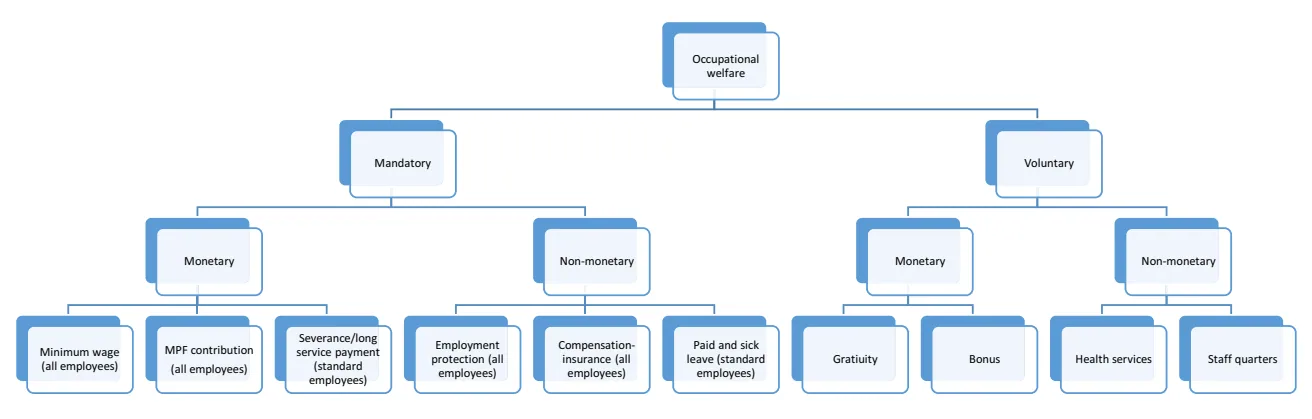
Figure 1. Domains and examples of occupational welfare in Hong Kong.
Methods
Drawing on the concepts of OW and platform work, this study investigates the dynamic relationships between workers, digital platforms, and social policy. Two research questions were formulated: (1) How do platform workers experience and understand their OW? (2) What challenges do platform work and the gig economy pose to social policy? A framework of OW, including employer-provided social protection and the government's regulated labour protection, was adopted to answer the questions and conceptualise the data, which considers platform–worker, state– platform, and worker–state relations. This study conducted in-depth and semistructured interviews to collect qualitative data on workers' experiences and views.
Purposive sampling was conducted to select the most relevant interviewees and maximise variety (Flick, 2018). As we focused more on generic or lower-skilled workers, who are more relevant to occupational risks and welfare (Vallas & Schor, 2020), the primary inclusion criterion of platform workers was working for online platforms mediating local on-demand labour services within the last six months before the interviews were conducted. To understand how digital technology and platforms restructure work and OW, we pragmatically selected workers from the platforms using apps and algorithms regarding organising work tasks. Consequently, food delivery workers became the main research focus of this case study. While a few logistics and ride-hailing companies also use these algorithms, workers tend to rely less on platforms in these sectors as their main source of income (Chan et al., 2022).
By sending invitations to social media groups, referring to cases from unions, and snowballing, the research team recruited forty-six workers from November 2021 to April 2022. Because of the COVID-19 pandemic, interviews were mainly conducted online via Zoom. Table 1 shows the interviewees' backgrounds. Similar to the general platforms' gender distribution, men made up the majority of this sample (Leung, 2022). Most of the interviewees were aged 20–39 years, and their educational attainment was not restricted to sub-degrees or below. More than half of the respondents considered platform work to be their primary income source. Among the three types of delivery work promoted by platforms, motorcycle drivers, bicycle riders, and pedestrians, motorcycle drivers together accounted for about 80 per cent of the participants in this study. Ethical approval was obtained from Lingnan University before data collection, and verbal and written consent was received from the respondents before the interviews. Each interview took about an hour and a half and was recorded and transcribed for analysis. Interview guidelines were informed by the OW framework and were set to be open-ended. Theoretical and open coding was implemented for the thematic analysis (Adu, 2019). The research team first identified themes related to the framework by searching keywords such as 'insurance', 'accidents', and 'self-employment'. Subsequently, researchers further mapped emerging themes beyond the framework, such as 'fairness' and 'autonomy'. After two rounds of thematic analysis, a range of themes was classified and categorised into different groups to address the research questions.
The following domains of analysis display how platform workers relate themselves to the gig economy, platform-mediated work, and OW. Some verbatim
Table 1. Background of interviewees
| Total (n = 46) | |
|---|---|
| Gender | |
| Male | 40 |
| Female | 6 |
| Total | 46 |
| Age (years) | |
| Below 20 | 2 |
| 20–29 | 18 |
| 30–39 | 19 |
| 40–49 | 6 |
| 50 or above | 1 |
| Total | 46 |
| Educational attainment | |
| Sub-degree or below | 28 |
| Degree or above | 18 |
| Total | 46 |
| Income sources | |
| Primary | 26 |
| Multiple | 20 |
| Total | 46 |
| Type of delivery | |
| Motorcycle driver | 38 |
| Bicycle rider | 4 |
| Pedestrian | 4 |
| Total | 46 |
statements will be quoted to illustrate key themes and sub-themes before the reconceptualisation of data in the discussion.
Findings
Based on the OW framework and thematic analysis, this section elucidates workers' experiences and perceptions of platform-related risks, pension contributions, timebased welfare, and the regulatory dilemma.
Algorithm-led occupational risks: from income precarity to uncompensated injuries
The organisation of the labour process and market of platform work is mediated by digital technologies that transform employment relations, workforce competition, and wage settings (Greve, 2022; Woodcock & Graham, 2020). A prominent theme frequently mentioned by the workers was income precarity and pay cuts, including irregular and uncertain pay. It was suggested that the number of workers' monthly income depended not only on the orders taken from the platforms but also on the order acceptance rate and labour market conditions. Only if workers successfully took a certain percentage of orders assigned by platform-led algorithms could they avoid a significant income reduction. However, the general piece rate per order has been declining because of the growing pool of workers available on the platforms. Facing stronger competition over gig work, some workers underwent a pay cut unilaterally initiated by platforms during the pandemic.
It is quite hard to calculate my wages since it depends on how many days off I have in that month. I always work 12 to 14 hours per day ::: The system is quite bad. If you fail to meet the 80 per cent acceptance rate of orders, they will not give you the bonus. I always feel worried about the loss of so much money. (Francis, aged 27 years, breadwinner, driver as the main income source)
Our hard-earned cash has been reducing since the past few years. Unfortunately, sometimes you could only receive a few orders. Because of our self-employed status, there is no guaranteed income. The platforms need more workers online to stand by customers' requests and ensure they could accept every order. They prefer an oversupply of workforce, which makes us suffer from less orders. But who cares about our incomes? (Vivien, aged 24 years, rider working for multiple platforms)
With platform work's lower entry barrier and the surge of unemployment caused by lockdown measures, digital platforms generally welcomed more workers to be available for work at all times, which creates richer human resource analytics and stronger network effects in favour of the platforms' interests. Therefore, cost-based competition for orders intensifies and generates downward pressure on workers' service fees (Vallas & Schor, 2020). Consequently, workers were pushed to accelerate their work and extend their waiting time to offset the impact of the dropping piece rate and to maintain the same ranking rated by the algorithms. Otherwise, workers can be downgraded and excluded from receiving a better order regarding location and income. Algorithmic automation boosted workforce availability via apps in the absence of transparency and negotiation. Some have associated this with a higher delivery pace and risk of traffic accidents (Kim et al., 2022).
The nature of (platform) work is to risk our life. I understand the traffic rules, but I must run the red lights as I am in hurry ::: Our income depends on completing the tasks, since we don't have guaranteed hourly wages. To maintain the same ranking and income under the piece rate, we must run endlessly. (Oscar, aged 34 years, driver with a single income)
Obviously, it is false self-employment, but you need to comply with platforms' rules. For example, if you want to receive orders assigned by platforms, you need to be online. Workers would have no choice but to stay in the highest rank to ensure adequate orders and incomes, which makes them more submissive to platforms' control. (Alex, aged 38 years, pedestrian, part-time work as a single income)
Moreover, some business costs of the platform are shifted to workers, for example, illegal parking fines and motorbike maintenance costs. Without proper labour insurance, the platforms claim that all independent contractors are already protected by non-employee insurance. As such, platform workers have to purchase private insurance at higher prices, as they are regarded as self-employed workers who own the devices for commercial use.
The platform mentioned that we are covered by some insurance schemes. However, it seems to be very complicated to claim so little money only for hospitalisation. The platform's insurance is even worse than mine. Previously, a worker died during the delivery, and the insurance company emphasised that they were not responsible for the heart attack and paid nothing. (Henry, aged 29 years, driver, currently not working because of injuries)
Accordingly, platform workers encounter unpaid rest days and sick leave, given their self-employed status, leading to limited access to labour compensation. Under the HK legal system, independent contractors are not entitled to mandatory OW, yet platform-offered insurance is inadequate to cover the costs. Moreover, being self-employed, workers' incomes are easily interrupted by incidents of stolen bicycles or broken motorcycles, resulting in an unexpected temporary suspension of work.
Perceived irrelevance of private occupational pension
While occupational pensions are widely recognised as a major form of OW (Pavolini & Seeleib-Kaiser, 2018), the MPF in HK was considered dispensable by platform workers. The lack of social insurance and public pensions in HK cannot fully address workers' needs for post-retirement income adequacy and security (Au-Yeung & Chan, 2020). Consequently, the MPF became the only contributory scheme for compulsory private savings and investment in which the costs were shared by employees and employers. Platform workers, defined as self-employed persons, have lost the key monetary benefits of OW offered by platforms. In principle, workers suffer from this omission which hurts the quality of their later lives. Interview data revealed that not contributing to the MPF account did not matter to workers based on their understanding of the private occupational pension scheme. No interviewees mentioned the necessity of MPF contribution.
Honestly, I'm not sure if it is good or not to be excluded from MPF. Can it guarantee your living? I don't think it helps. I would rather prepare for retirement by myself rather than let them invest. (Kelvin, aged 25 years, rider)
The MPF is a kind of tax or compulsory financial investment for me. It is risky that we may encounter a loss before retirement. Alternatively, I want to be more hardworking now and earn more, which is better than MPF. I wonder if MPF is enough for post-retirement needs. (Dorothy, aged 38 years, pedestrian and single mother)
The institutional arrangements of the MPF fuelled the perception of the monetary OW's irrelevance. Owing to the expected inadequacy and insecurity of the MPF, many respondents with insecure incomes did not count it and downplayed its significance for the future. The disentitlement to employers' MPF contributions is perceived as bearable because their savings in the accounts could be lost in the financial market or spent on the high administrative fee charged by fund managers. Therefore, the denied access to the MPF as OW was perceived as irrelevant between standard, precarious, and platform workers in HK.
Some may think not engaging in MPF is a loss because half of the contribution is paid by the employer as welfare for employees. However, I could not freely get online or offline if I chose this welfare. I don't want to be hired by an unscrupulous firm and stuck in such relations. I would rather save some money for myself and the future. (Steve, aged 32 years, with multiple income sources)
For Steve, the relative loss of the MPF was inevitable, as he objected to being employed by an unpopular platform company, which is seen as resistance to platform dominance. Despite the need for pension income, it was seemingly not worthwhile for some platform workers to pursue the MPF. Overall, the MPF as an OW was considered irrelevant to platform workers in their everyday working lives, in which the lack of OW was accepted by workers. This calls for a more contextual and relational examination of OW in different social settings.
Time-based welfare and the work-life flexibility of self-employment
While workers did not demonstrate a strong expectation of traditional OW, they aspired for intangible OW that was interpreted as atypical welfare given by the occupation (see Farnsworth, 2018). Time flexibility was emphasised by respondents, as they preferred more work-life balance and fewer work-family conflicts by selecting their work schedules. More importantly, digital devices and platform work enabled them to choose orders and their working hours, avoiding any infringement on their private lives. Thus, subjective freedom is key to workers, especially those with care duties.
I don't want to accept a stable and scheduled order, which means I must work for all service requesters. I really enjoy the freedom that I work when I want to work ::: I am happy and free. If I want to rest, I can sleep longer and work later. I don't need to apply for leave from a boss ::: Because of this flexibility, it is perfect for a freelancer. (Wilson, aged 23 years, driver, working on multiple platforms)
The flexibility is that I can reject orders. I must take care of my family members if they need. There is a button on the App to stop accepting orders. I could simply press it and then go home to take care of my family. I can leave immediately as I turn off the mobile app. If you are employed by someone, you will be largely managed, even at home or during holidays. Now, you could really get off based on the offline status. (Francis, aged 35 years, driver, father with a new-born baby)
Additionally, the pursuit of time flexibility also reflected that some workers were somehow deprived of leisure and rest time under current labour market institutions, which pushed them away from conventional standard employment and towards a more autonomous work pattern. With the use of digital devices and apps, workers can quit the platform and have control over the working hours by pressing the 'online' and 'offline' button. However, the reality is far from straightforward, and the so-called freedom at work included the costs paid by the workers themselves.
I could choose when to be online or offline, but it may badly affect your ranking. The platform did control us by setting up the minimum acceptance rates, preventing workers from refusing orders while online. Of course, you could reject orders, but it comes with worse orders and about 30 per cent of scores will be deducted. (Adrian, aged 19 years, rider, student worker)
As suggested by Adrian, despite workers' flexibility in switching between online and offline statuses, their labour processes are substantially monitored and directed by platform algorithmic control via the gamification and metrication of labour discipline (Woodcock & Graham, 2020). Platforms can suspend or terminate workers' accounts without reason. Time-based welfare is de facto self-made and selffinanced, which does not impact the platforms. Like self-employed workers' labour protection (Sieker, 2022), platform workers' OW, in this sense, is attached to their self-employment status and paid by workers. This expands the notion of OW as a product of industrial capitalism to that of the gig and digitised economy.
Regulatory dilemma and the 'invisible' government
The regulation and provision of OW cannot be independent of platform workers' preferences regarding welfare and work. On the one hand, some respondents attribute the dominance of platforms to their monopolistic position in the market, tolerated by the government's inaction. On the other hand, it would be problematic for workers if the government tightened regulations over platforms and platform–worker relations. Regardless of workers' willingness, platforms purposively report all transactions dealt with workers to distance themselves from employers' liabilities.
It is unequal between us and the platform because they collect our data via the GPS system and the Apps. I have no idea how they assign the work. Although we are independent contractors, the platforms would file taxes, and we still need to pay for it. Indeed, these companies should at least protect some workers' rights and compensate their necessary risks. (Henry, aged 26 years, pedestrian with multiple incomes)
While platforms declare and report workers' taxes to the government, workers are 'made responsible' for all labour costs in the neoliberal gig economy (Tirapani & Willmott, 2023). Platform–worker relations are depicted as unequal, as platforms' decisions via algorithms lack transparency and information for workers. Many interviewees understood how platforms made huge profits by exploiting legal loopholes facilitated by the government's non-intervention approach to the platform economy. As the government appears invisible, platforms continue the possibly unlawful practices of false self-employment.
The government turns a blind eye to false self-employment. This kind of 'selfemployment' is a result of the poor arrangement of institutions in Hong Kong. We can only choose between accept or decline. There is no space for communication or arguments ::: If the government defines self-employment and employees' status more determinedly, we could have some guaranteed orders and incomes. (Daniel, aged 43 years, driver, former courier for goods)
In principle, the government is capable of constraining platform power in the market and rebalancing the relative strength of workers and platforms. As all work arrangements are non-negotiable and unilaterally decided by algorithms, there is limited space for workers to challenge automatic decisions and initiate dialogues with platforms. However, workers' perceived unfairness does not elicit resistance at work. With scepticism towards the government's determination to improve their working lives, workers' demands for stronger state intervention and protection are affected by their distrust of the government's regulatory approach and its poor record in enforcing labour law. From some interviewees' perspective, inappropriate regulation is counterproductive and hurts workers' interests.
It could be tricky as this (asking for more protection) may increase their costs and eventually cut back our service fees. If the government merely regulates the platforms and changes them back to traditional employment relations, you will lose all the freedom and flexibility. It would be more helpful if the platforms stop cutting our incomes and provide more basic protection or compensation. (Louis, aged 24 years, rider)
While workers might expect stronger compensation or minimum incomes from the platform, mandated by the government, they are also worried about losing timebased flexibility in the re-regulated employment relation. It seems that there is tension between the two aspirations as they represent different regulatory approaches to platform–worker relations. Under strictly defined employee statuses, platforms may impose stronger labour control if they offer more employee rights. Interviewees' ambivalent attitudes towards government regulation are shaped by the power imbalance between platforms and workers, alongside the lack of workers' voices in policymaking. Workers are then forced to make difficult choices between flexibility and protection, yet institutional rearrangements may deal with such plausible conflicts (Cioffi et al., 2022; Sieker, 2022).
The platform always emphasises their role of intermediary and the absence of employer status. It seems that they are not afraid of being litigated. As the legal terms are quite arbitrary about self-employment, the platforms know how to play the games and it depends on the judges' decision. (Peter, aged 29 years, driver, union activist)
The system to deal with labour disputes in HK lies in the legal framework and litigation, which turns structural conflicts into individual cases, including the technical costs and bureaucratic barriers constraining workers' engagement. Without collective bargaining institutions and democratic governance, platform workers' needs for OW protection and flexibility cannot be incorporated into policymaking.
Discussion
This study contributes to the literature by bringing together social policy, platform work, and the gig economy through the lens of OW. The findings demonstrate how platform work reshapes the forms and relations underlying OW regarding platforms' work arrangements and workers' experiences. While new occupational risks have been generated by platform algorithmic devices and outsourcing practices, workers are generally excluded from labour compensation under the current regulatory framework. The loss of monetary OW was considered dispensable by participants, including standard workers, who perceived private occupational pensions to be irrelevant. Additionally, interviewees individualised the costs of time-based flexibility as a form of OW, given the self-financed leave and rest time available through self-employment. Re-regulating platform–worker relations might address the lack of protection but also risk the relative autonomy enjoyed by workers. Arguably, the platformisation of work was translated into the gigification of OW, that is, the disentitlement of workers' employer-provided welfare, the absence of guaranteed and transparent incomes, and the shift of some OW's costs to workers (Behrendt et al., 2019; Schoukens, 2020; Woodcock & Graham, 2020).
Figure 2 shows the institutional underpinnings of OW in HK's policy context and the platform-mediated labour market, with the changing relationships between the state, workers, and platforms. First, platform–worker relations replaced standard employment relations with a set of fissured relations in the new contractual agreements, marked by the constructed status of independent contractors associated with digitised labour control (Joyce et al., 2019). The platform's monopolising and contractual power curtailed workers' OW and largely reduced it to welfare that the workers were responsible for. This has placed workers in a disadvantaged position that deprives them of employment-related protection and participation in gig work
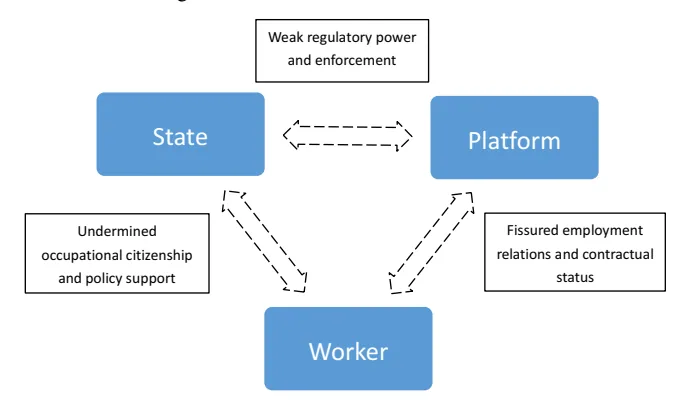
Figure 2. The institutional underpinnings of platform workers' occupational welfare.
(Woodcock & Graham, 2020). Second, the state displayed weak regulatory power in the platform-mediated labour market (Stewart & Stanford, 2017). Using a lighttouch and voluntarist approach to employment regulation (Inversi et al., 2023), the HK government's reliance on the judicial system, the Labour Tribunal, to report cases and enforce labour inspection might perpetuate the misclassification of false self-employment. Without new legislative initiatives, the government will lack restrictive power to oversee platform moves and expose workers to stronger occupational risks in the absence of OW compensation (Cioffi et al., 2022; Sieker, 2022). Finally, occupational citizenship, as the social contract between the state and working citizens that defines labour rights and obligations (Budd, 2011; Standing, 2009), is undermined in the gig economy. As the employment status of platform workers is 'freelancer' and, therefore, not covered by the Employment Ordinance, platform workers are not eligible for some OW and policy support, for example, the occupational pension. Consequently, government-regulated OW is considered invisible or irrelevant for workers, exhibiting an extreme form of laissez-faire in response to the gig economy in HK.
The policy dilemma of platform work regarding regulation/protection and timebased autonomy originated from the HK government's conventional approach to employment relations which focuses on standard employment in accessing labour protection. Policymakers must rethink the governance model of platform work to consider addressing workers' voices and promoting a sustainable digitised labour market; for example, a new legal category or classification of platform work is necessary for entitlements.
For broader social policy implications, the institutionalisation of OW under new forms of economy and employment relations becomes a key question (Farnsworth, 2018). While OW was initially mandated and provided to deal with the 'socially caused diswelfare' of different occupations in the industrial economy (Titmuss, 1968, p.133), the social costs produced by platform work have been externalised to workers and society. The two-folded policy implication is that the government still has a role in reforming OW entitlements based on different categorisations of workers, catering to the need for protection and flexibility. In addition, state regulation is essential to address the unequal relations between workers and
platforms, minimising the diswelfare brought about by the platformisation of work and gigification of OW. Although countries' policy responses to the digitisation and platform work diverge, there is a tendency for all online platforms to expand their market share and cut costs across social settings (Vallas & Schor, 2020). This convergence features the common challenges posed to welfare states (Greve, 2022). How welfare states can address workers' social and labour rights while adapting social policies to the relatively inevitable digitisation of society still requires further investigation.
This study contributes conceptually and empirically to the literature. First, it links the OW framework to the investigation of platform workers' experiences, adopting a relational approach to analysing how workers relate themselves to the state and platforms, which could be applied to understand platform work and social policy in other contexts (see Figure 2). This moves beyond previous studies' overemphasis on social protection coverage. Second, it adds value to workers' experiences with OW and platform work in the East Asian context. Further studies should consider other female-dominated forms of platform work and intersectional experiences.
Acknowledgment. This research project was funded by the Hong Kong Research Grant Council (Early Career Scheme: 23601021) and Oxfam Hong Kong. Special thanks go to the platform workers who spent their invaluable time on this research.
Competing interests. The authors declare none.
References
Adu, P. (2019). A step-by-step guide to qualitative data coding. London: Routledge.
Au-Yeung, T. C., & Chan, K. (2020). Crafting the financial-subject: A qualitative study of young workers' experiences in financialised pension investment in Hong Kong. Journal of Social Policy, 49(2), 323–341.
Au-Yeung, T. C., & Qiu, J. (2022). Institutions, occupations and connectivity: The embeddedness of gig work and the platform-mediated labour market in Hong Kong. Critical Sociology, 48(7–8), 1169–1187.
Behrendt, C., Nguyen, Q., & Rani, U. (2019). Social protection systems and the future of work: Ensuring social security for digital platform workers. International Social Security Review, 72(3), 17–41.
Brunsdon, E., & May, M. (2019). Occupational welfare. In: M. Powell (Ed.), Understanding the mixed economy of welfare (pp. 159–182).
Budd, J. (2011). The thought of work. Ithaca: Cornell University Press.
Busemeyer, M., Kemmerling, A., Marx, P., & van Kersbergen, K. (2022). Introduction. In M. Busemeyer, et al. (Eds.), Digitalization and welfare state (pp. 21–38). Oxford: Oxford University Press.
Chan, C., Au-Yeung, T., Tsui, A., & Ho, Y. (2022). Towards Fair Work: Working Conditions of Grassroot Platform Labour in Hong Kong. Hong Kong: The Chinese University of Hong Kong.
Chu, Y. W., & Kong, T. Y. (2022). East Asian Varieties of Capitalism and Socio-Economic Inequality. Journal of Contemporary Asia, LatestArticles, 1–29.
Cioffi, J., Kenney, M., & Zysman, J. (2022). Platform power and regulatory politics: Polanyi for the twentyfirst century. New Political Economy, 27(5), 820–836.
Considine, M., Mcgann, M., Ball, S., & Nguyen, P. (2022). Can robots understand welfare? Exploring machine bureaucracies in welfare-to-work. Journal of Social Policy, 51(3), 519–534.
Daugareilh, I. (2021). Social protection for digital platform workers in Europe. International Social Security Review, 74(3–4), 5–12.
Desiere, S., & Struyven, L. (2021). Using artificial intelligence to classify jobseekers: The accuracy-equity trade-off. Journal of Social Policy, 50(2), 367–385.
De Stefano, V. (2015). The rise of the just-in-time workforce: On-demand work, crowdwork, and labor protection in the gig-economy. Comparative Labour Law & Policy Journal, 37, 471–503.
-
Drahokoupil, J., & Piasna, A. (2022). Internet and platform work in Europe. In M. Busemeyer, et al. (Eds.), Digitalization and welfare state (pp. 255–273). Oxford: Oxford University Press.
-
Eichhorst, W., Hemerijck, A., & Scalise, G. (2022). Welfare states, labor markets, social investment, and the digital transformation. In M. Busemeyer, et al. (Eds.), Digitalization and welfare state (pp. 64–82). Oxford: Oxford University Press.
-
Farnsworth, K. (2018). Occupational welfare. In B. Greve (Ed.), Routledge handbook of the welfare state (pp. 34–45). London: Routledge.
-
Flick, U. (2018). An introduction to qualitative research. London: Sage.
-
Gregory, L. (2017), Workers on tap but income drying up? The potential implications for incomes and social protection for the 'gig economy'. In J. Hudson, C. Needham, & E. Heins (Eds.), Social policy review, 29 (pp. 23–41). Bristol: Policy Press.
-
Greve, B. (2018). At the heart of the Nordic occupational welfare model: Occupational welfare trajectories in Sweden and Denmark. Social Policy & Administration, 52(2), 508–518.
-
Greve, B. (2022). Rethinking welfare and the welfare state. Northampton: Edward Elgar.
-
Hamblin, K., Burns, D., & Goodlad, C. (2023). Technology and homecare in the UK: Policy, storylines and practice. Journal of Social Policy, 1–17.
-
Hassel, A. (2020). Employment relations, welfare and politics. In C. Frege & J. Kelly (Eds.), Comparative employment relations in the global economy (pp. 169–187). London: Routledge.
-
Henman, P. (2022). Digital social policy: Past, present, future. Journal of Social Policy, 51(3), 535–550.
-
Inversi, C., Dundon, T., & Buckley, L. (2023). Work in the gig-economy: The role of the state and non-state actors ceding and seizing regulatory space. Work, Employment and Society, 37(5), 1279–1298.
-
Iversen, T., & Rehm, P. (2022). Big data and the welfare state. Cambridge: Cambridge University Press. James, A., & Whelan, A. (2022). 'Ethical' artificial intelligence in the welfare state: Discourse and discrepancy in Australian social services. Critical Social Policy, 42(1), 22–42.
-
Jerg, L., O'Reilly, J., & Buschoff, K. (2021). Adapting social protection to the needs of multiple jobholders in Denmark, the United Kingdom and Germany. Transfer: European Review of Labour and Research, 27(2), 237–253.
-
Joyce, S., Stuart, M., Forde, C., & Valizade, D. (2019). Work and social protection in the platform economy in Europe. Advances in Industrial and Labor Relations, 25, 153–184.
-
Kalleberg, A. (2018). Precarious lives: Job insecurity and well-being in rich democracies. Cambridge: Polity. Kangas, O. (2021). Work accident and sickness benefits. In D. Béland, et al. (Eds.), The Oxford handbook of the welfare state (pp. 540–556). Oxford: Oxford University Press.
-
Kim, M. (2015). Comparative welfare capitalism in East Asia. Basingstoke: Palgrave Macmillan.
-
Kim, S., Kang, M., & Park, J. (2022). Digital industrial accidents: A case study of the mental distress of platform workers in South Korea. International Journal of Social Welfare, 31(3), 355–367.
-
Koster, F. (2023). Self-employment and technology: different models of labor relations. In B. Greve (Ed.) Welfare state in a turbulent era (pp. 28–47). Cheltenham: Edward Elgar.
-
Kristal, T. (2017). Who gets and who gives employer-provided benefits? Social Forces 96(1), 31–64.
-
Labour Department(2023).Employment ordinance.https://www.labour.gov.hk/eng/public/ConciseGuide.htm Legislative Council Secretary (2020). Protection of labour rights of 'gig workers' in selected places. https:// www.legco.gov.hk/research-publications/english/1920in10-protection-of-labour-rights-of-gig-workers-inselected-places-20200526-e.pdf
-
Lei, Y. W. (2021). Delivering solidarity: Platform architecture and collective contention in China's platform economy. American Sociological Review, 86(2), 279–309.
-
Leung, L. (2022). 'No South Asian Riders, Please': The Politics of Visibilisation in Platformed Food Delivery Work during the COVID-19 Pandemic in Hong Kong. Critical Sociology, 48(7–8), 1189–1203.
-
Mann, K. (2009). Transforming employer responsibilities: The privatisation of occupational pensions. Journal of Comparative Social Welfare, 25(2), 139–146.
-
Marshall, T. H. (1950). Citizenship and social class. Cambridge: Cambridge University Press.
-
Millar, J., & Whiteford, P. (2020). Timing it right or timing it wrong: how should income-tested benefits deal with changes in circumstances? Journal of Poverty and Social Justice, 28(1), 3–20.
-
Natali, D., Keune, M., Pavolini, E., & Seeleib-Kaiser, M. (2018). Sixty years after Titmuss: New findings on occupational welfare in Europe. Social Policy & Administration, 52(2), 435–448.
-
Offe, C. (1985). Disorganized capitalism. Cambridge: Polity.
-
Ozkan, U. (2020). Mandatory occupational welfare: Severance pay as an unemployment compensation instrument. Social Policy & Administration, 54(1), 28–44.
-
Parwez, S. (2023). Food for thought: A survey on the nature of work precarity in platform-based on-demand work. Social Policy and Society, 1–17.
-
Pavolini, E. & Seeleib-Kaiser, M. (2018). Comparing occupational welfare in Europe: The case of occupational pensions. Social Policy & Administration, 52(2), 477–490.
-
Pulkka, V., & Simanainen, M. (2022), Socio-economic performance of European welfare states in technology-induced employment scenarios. Journal of Social Policy 51(4), 920–944.
-
Ravenelle, A., Kowalski, K., & Janko, E. (2021). The side hustle safety net: Precarious workers and gig work during COVID-19. Sociological Perspectives, 64(5), 898–919.
-
Riva, E., & Rizza, R. (2021). Who receives occupational welfare? Transfer: European Review of Labour and Research, 27(1), 97–112.
-
Schor, J., Attwood-Charles W., Cansoy, M. et al. (2020), Dependence and precarity in the platform economy. Theory and Society 49(5): 833–861.
-
Schou, J., & Pors, A. (2019). Digital by default? A qualitative study of exclusion in digitalised welfare. Social Policy & Administration, 53(3), 464–477.
-
Schoukens, P. (2020). Digitalisation and social security in the EU. The case of platform work: from work protection to income protection? European Journal of Social Security, 22(4), 434–451.
-
Sieker, F. (2022). Platform work and access to social protection across major European countries. Journal of International and Comparative Social Policy, 38(3), 193–207.
-
Silva, V. (2022). The schumpeterian consensus: The new logic of global social policy to face digital transformation. Journal of Social Policy, FirstView, 1–17.
-
Sinfield, A. (1978). Analyses in the social division of welfare. Journal of Social Policy, 7(2), 129–156.
-
Standing, G. (2009). Work after globalization: Building occupational citizenship. Cheltenham: Edward Elgar. Stewart, A., & Stanford, J. (2017). Regulating work in the gig economy: What are the options? The Economic and Labour Relations Review, 28(3), 420–437.
-
Tirapani, A., & Willmott, H. (2023). Revisiting conflict: Neoliberalism at work in the gig economy. Human Relations, 76(1), 53–86.
-
Titmuss, R. (1958). Essays on "the welfare state". London: Unwin Books.
-
Titmuss, R. (1968). Commitment to welfare. London: Unwin Books.
-
Vallas, S., & Schor, J. (2020). What do platforms do? Understanding the gig economy. Annual Review of Sociology, 46, 273–294.
-
Wilkinson, A., Dundon, T., Mowbray, P., & Brooks, S. (Eds.) (2022). Missing voices? Integrating worker voice and social dialogue in the platform economy. Northampton: Edward Elgar.
-
Woodcock, J., & Graham, M. (2020). The gig economy: A critical introduction. Cambridge: Polity.
Cite this article: Au-Yeung TC, Chan CK, Ming CKK, and Tsui WYA (2025). The gig economy, platform work, and social policy: food delivery workers' occupational welfare dilemma in Hong Kong. Journal of Social Policy 54, 673–691. https://doi.org/10.1017/S0047279423000673