Computational thinking in mathematics education: A systematic review
Nguồn và giấy phép
- Tên bài
- Computational thinking in mathematics education: A systematic review
- Tác giả
- Shivaraj Subramaniam, Siti Mistima Maat, Muhammad Sofwan Mahmud
- Tạp chí
- Cypriot Journal of Educational Sciences, 2022
- DOI
- 10.18844/cjes.v17i6.7494
- Giấy phép
- CC BY 4.0
Đã chuyển định dạng từ bản gốc; nội dung không thay đổi.
Xem bản gốc
Cypriot Journal of Educational Sciences

Volume 17, Issue 6, (2022) 2029-2044
Computational thinking in mathematics education: A systematic review
Shivaraj Subramaniam, National University of Malaysia, Education Department, Bangi, Selangor, Malaysia https://orcid.org/0000-0001-9297-1995
Siti Mistima Maat *b , National University of Malaysia, Research Centre of Teaching and Learning Innovation, Faculty of Education, 43600 Bangi, Selangor, Malaysia.https://orcid.org/0000-0002-5507-9081
Muhammad Sofwan Mahmud , National University of Malaysia, Research Centre of Teaching and Learning Innovation, Faculty of Education, 43600 Bangi, Selangor, Malaysia. https://orcid.org/0000-0002-0504- 4622
Subramaniam, S., Mahmud, M. S. & Maat, S. S. (2022). Computational thinking in mathematics education: A systematic review. Cypriot Journal of Educational Sciences 17(6). 2029-2044 https://doi.org/10.18844/cjes.v17i6.7494
Received from February 15, 2022; revised from April 30, 2022; accepted from June 25, 2022. ©2022 Birlesik Dunya Yenilik Arastirma ve Yayincilik Merkezi. All rights reserved.
Abstract
As a research area, computational thinking (CT) has gotten increased attention in mathematics education in the last decade. A study identifying patterns in CT research would be essential in understanding the technique for developing CT in mathematics and guiding future research attempts. As a result, the goal of this systematic literature review is to look at the learning methods promoting CT in mathematics lessons. The Preferred Reporting Items for Systematic Review and Meta-Analyses standards were utilised to guarantee that this study was done systematically. The result shows that even though there are various types of learning tools that are most commonly used, the coding programming tool and robotic activities tool are the most user-friendly methods for encouraging CT in mathematics education. This literature review is intended to provide educators with a better understanding of learning tools in order to enhance CT, which may help transform education into something more creative and meaningful.
Keywords: Computational thinking, learning tools, mathematics, education, systematic review.
1. Introduction
In the current world, digital technology and culture are everywhere. Computational thinking (CT) is among the abilities required to resolve difficulties in today's technologically advanced and complicated world. With a fundamental work by Wing (2006), the modern wave of the expression 'computational thinking' began. Historically, however, Seymour Papert coined the term CT in the year 1980, with various definitions. As per Papert (1980), CT results from his constructivist educational approach, emphasising emotional and social aspects in addition to technical knowledge. Despite the fact that Seymour Papert suggested the CT concept in the year 1980 and again in the year 1996 (Papert, 1980, 1996), the thinking skills idea among developing students through computer science concepts were unable to gain popularity among the academic community for quite a number of years. This was until Jeannette Wing's (2006) research emerged in the communications of the association with regards to computing machinery.
She stated in her essay that CT symbolises a globally applicable mindset and talent that anybody, not just computer scientists, will be ready to acquire and apply in problem-solving. CT is described by Wing (2006) as 'the mental processes involving framing problems including their solutions expressed in a way that an information-processing agent may successfully carry out'. There were many studies undertaken to eliminate the gap in CT (Sun et al., 2021b). As a consequence, many academics emphasise the need of including CT in the curriculum in regard to a 21st-century literacy at various education levels, starting from kindergarten to university (Abdullah et al., 2019; Jaipal-Jamani & Angeli, 2017; Nouri et al., 2020; Pei et al., 2018; Tasso et al., 2019).
Consequently, CT resembles a 21st-century skill set that should be mastered by everyone, not only computer scientists (So et al., 2020). Besides computer science, CT has extended into a variety of other domains, which include life sciences (Arık & Topçu, 2022), music (Bell & Bell, 2018), mathematics (Weintrop et al., 2016; Benakli et al., 2017), science in general (Basu et al., 2017), robotics (Jaipal-Jamani & Angeli, 2017; Yi Wu & Sheng Su, 2021) as well as sciences and arts (Lin et al., 2020). CT necessitates a wide range of cognitive talents, which includes parsing and abstraction, algorithms, pattern recognition, iterative thinking, transformation, problem reduction, error prevention and preservation, as well as intuitive reasoning. These abilities are critical in the development of problemsolving abilities. CT is a fundamental skill that all individuals must learn in mathematics education. It is an essential ability, comparable to reading, writing and calculating (Liu et al., 2022).
Furthermore, although there were a lot of data supporting the efficacy of programming in improving students' CT in mathematics education, the study in regards to the relationship between effectiveness and programming instructional design components was not very imposing (Sun et al., 2021b). To achieve more successful programming in mathematics education, Lye and Koh (2014) advocated for additional research into programming classroom design aspects.
However, in mathematics education, insufficient attention has been made to the systematic evaluation with regards to the efficiency of programming instructional design in facilitating the CT abilities acquisition (Grover & Pea, 2017; Lye & Koh, 2014). As a result, researchers have conducted a number of studies in an attempt to identify tools for developing CT abilities in mathematics education (Mecca et al., 2021; Pei et al., 2018; Siong & Kamisah, 2018). However, many people are still ignorant of the most popular method for developing CT abilities in mathematics. Furthermore, additional study is required to close this gap. Not all nations are interested in conducting research on CT skills in mathematics instruction. Some countries are considering CT as a critical component of mathematics instruction (Morris et al., 2020).
Polat et al. (2021) stated that further research into the usefulness of CT in mathematics education should be carried out in the future to compare the true impact of CT on problem-solving skills in mathematics. There must be research to discover the most popular countries conducting CT research and use them as a model for improving CT in mathematics education. So, a systematic study was undertaken to determine the most popular tool for building CT abilities in mathematics education to solve this issue. The purpose of this systematic review was to determine solutuions with respect to the research questions outlined below:
-
- What is the most popular tool used in fostering CT skills in mathematics education?
-
- Which country has the most research in this area of CT abilities in mathematics education?
-
- Which part or region is conducting more research in devolving CT skills in mathematics education?
2. Methodology
2.1. The review protocol performed using PRISMA
This review was performed utilising PRISMA, which was established by Page et al. (2021), with the goal of thorough reporting. It allows readers to evaluate the appropriateness of the methods and hence the result's trustworthiness. Moreover, presenting and summarising study aspects leading to a synthesis assists policymakers in evaluating the findings' applicability with respect to their own situations. As per Sierra-Correa et al. (2015), PRISMA has three main benefits. First, it provides precise research questions that allow systematics study. Second, it develops exclusion and inclusion criteria, and thirdly, it strives to analyse a massive scientific database publication within a certain time constraint. Finally, the PRISMA statement enables a comprehensive search for terms relating to innovative teaching.
2.2. Systematic searching strategies
To examine the related publications, our study employed four systematic procedures (identification, screening, eligibility and included). Using these strategies, the author were able to fully find and synthesise the research, which resulted in a transparent and well-organised systematic literature review.
2.2.1. Identification
WoS and Scopus are the primary sources for this systematic review investigation. Scopus is a reference and theoretical database launched by Elsevier in the year 2004. It comprises around 36,377 titles from approximately 11,678 distributors, 34,346 of which are peer-evaluated diaries in top-level topic fields, including sociologies, biological sciences, well-being sciences as well as physical sciences. On the other hand, WoS is a website that provides membership-based access to a variety of databases providing comprehensive reference information on a broad range of scholarly disciplines. It was founded by the Institute for Scientific Information, which is now managed by Clarivate Analytics. Table 1 displays the keywords used to find publications relating to CT.
Table 1. Keywords employed in the process of determining related literature
| Databases | Keywords used | |||||
|---|---|---|---|---|---|---|
| Scopus | TITLE-ABS-KEY (("computational* thinking" OR "computer* thinking" OR "* commutation thinking" OR "competition* thinking" OR "combinational* thinking") AND ("mathematics education" OR "" OR "mathematics learning" OR "mathematics schooling" OR "mathematics study" OR "mathematics teaching" OR "mathematics tutoring")) | |||||
| Web of Science | TS=(("computational* thinking" OR "computer* thinking" OR "commutation thinking" OR "competition* thinking" OR "combinational* thinking") AND ("mathematics education" OR "mathematics learning" OR "mathematics schooling" OR "mathematics study" OR "mathematics |
teaching" OR "mathematics tutoring"))
2.2.2. Screening
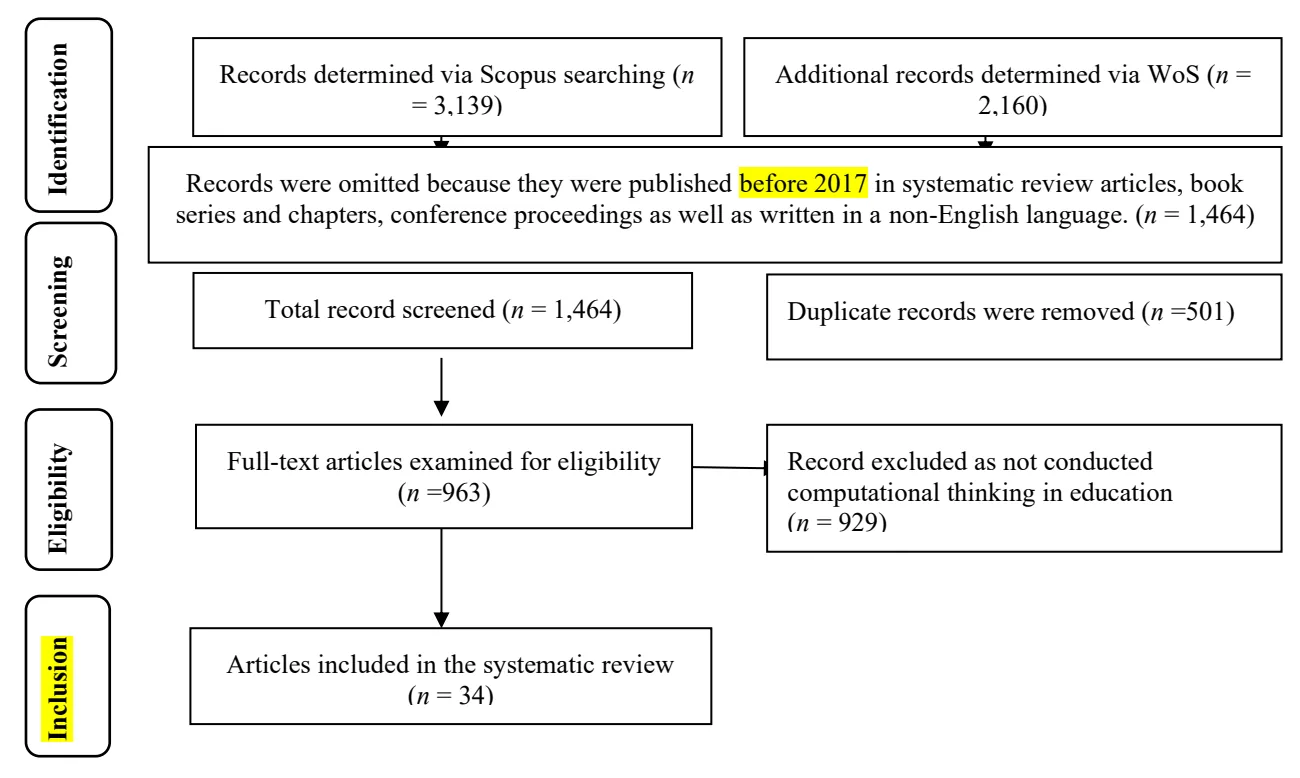
The subsequent step is screening. During this step, the papers were either included or omitted from the research relying on a set of criteria (as given in Table 2). Here, the first step includes eliminating journals (systematic reviews), novels, book series and chapters as well as conference proceedings from being considered. The screening procedure was then restricted to items published between the years 2016 and 2022, considering Kraus et al.'s (2020) 'research field maturity' concept. Because the amount of published research was sufficient to conduct a representative review, this timeline was taken into consideration.
Consequently, the author decided to exclusively examine empirical research papers written in English. Provided that 1464 items did not match the inclusion requirements, they were excluded using this procedure. Therefore, 1,464 items were determined to be appropriate for additional screening, in which 501 duplicate articles were eliminated after screening. Finally, there were 963 papers that needed to be evaluated relying on the exclusion and inclusion criteria.
| Criterion | Eligibility | Exclusion |
|---|---|---|
| Literature type | Journal (research articles) | Book, book series and chapters, systematic review articles as well as conference proceeding |
| Language | English | Non-English |
| Timeline | Between 2016 and 2022 | Before 2016 |
Table 2 The eligibility and exclusion criteria
2.2.3. Eligibility
The eligibility procedure follows the screening method. The author personally examined the articles extracted to guarantee that all of the remaining articles met the requirements. This was achieved by reading the titles, abstracts, and complete contents of the papers. This part of the procedure resulted in the exclusion of 929 articles because they did not focus on computational thinking in education and mathematics education and were published as a book chapter. Hence, the systematic literature review potentially comprised 34 papers.
2.2.4. Inclusion
The techniques for encouraging CT in mathematics education were the focus of the publications in this systematic review. The Scopus and WoS databases were used to select 34 articles for the table. These databases were selected for the quality and nature of their publications, particularly in the education field. The research's goals were all linked to computational thinking in mathematics education.
Figure 1. PRISMA systematic review adapted from Page et al. (2021)
3. Results
3.1. CT in mathematics education by year of publication
Publishing trend is an essential indication for identifying a field's development. Between 2016 and 2022, a lot of articles were published on fostering CT in mathematics education. There were 34 articles selected based on the research question. Figure 2 illustrates the distribution of the number of articles by year*.*
The graph shows that the number of articles on CT in mathematics education research increased slightly between 2016 and 2017. Although there has been an upward trend since 2018, interest in the field has risen significantly since 2019. The rise continued until there were significant changes in 2020 and 2022. Since 2016, there exists a rising trend in the number of publications published in the field of developing CT in mathematics education research.
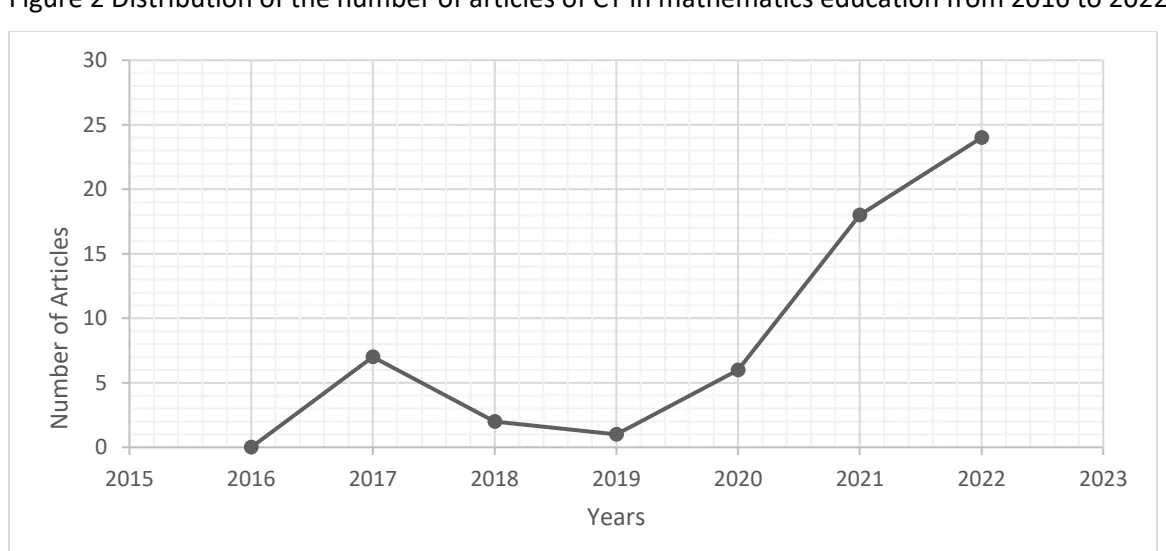
Figure 2 Distribution of the number of articles of CT in mathematics education from 2016 to 2022
3.2. The most populated tools used to develop CT in mathematics education
Relying on the literature review, researchers discovered that six types of tools were used in developing CT in mathematics education. The tools are teaching method (Cheng et al., 2017; Çoban & Korkmaz, 2021; Critten et al., 2021; Fang et al., 2017; Jeng et al., 2020; Marcelino et al., 2018; Matere et al., 2021; Menolli & Neto, 2021; Mouza et al., 2017; Quitério Figueiredo, 2017; Relkin et al., 2021; Rich et al., 2021; Sung & Black, 2020; Tucker-Raymond et al., 2021; Yildiz Durak, 2020), game-based learning (Agbo et al., 2021; Croff, 2017; Hooshyar et al., 2021; Menolli & Neto, 2021; Ng & Cui, 2021), coding programming (Critten et al., 2021; Deng et al., 2020; Fanchamps et al., 2019; Marcelino et al., 2018; Mecca et al., 2021; Ng & Cui, 2021; Özmutlu et al., 2021; Piedade et al., 2020; Quitério Figueiredo, 2017; Relkin et al., 2021; Rich et al., 2021; Ríos Félix et al., 2020; Shorey et al., 2021; Silva et al., 2021; Sun et al., 2021a; Sung & Black, 2020; Yi Wu & Sheng Su, 2021; Yildiz Durak, 2020), robotic activities(Critten et al., 2021; Fanchamps et al., 2019; García Angarita et al., 2017; Ioannou & Makridou, 2018; Jaipal-Jamani & Angeli, 2017; Mecca et al., 2021; Menolli & Neto, 2021; Merino-Armero et al., 2021; Ng & Cui, 2021; Özmutlu et al., 2021; Piedade et al., 2020; Relkin et al., 2021; Silva et al., 2021; Stewart et al., 2021; Sun et al., 2021a; Yi Wu & Sheng Su, 2021), visual programming language (Menolli & Neto, 2021) and computation logic (Menolli & Neto, 2021).
The percentage of the tools used in developing CT in education is illustrated in Figure 3. This result gives a comprehensive analysis with regards to the most popular tools that have been used in developing CT in mathematics education.
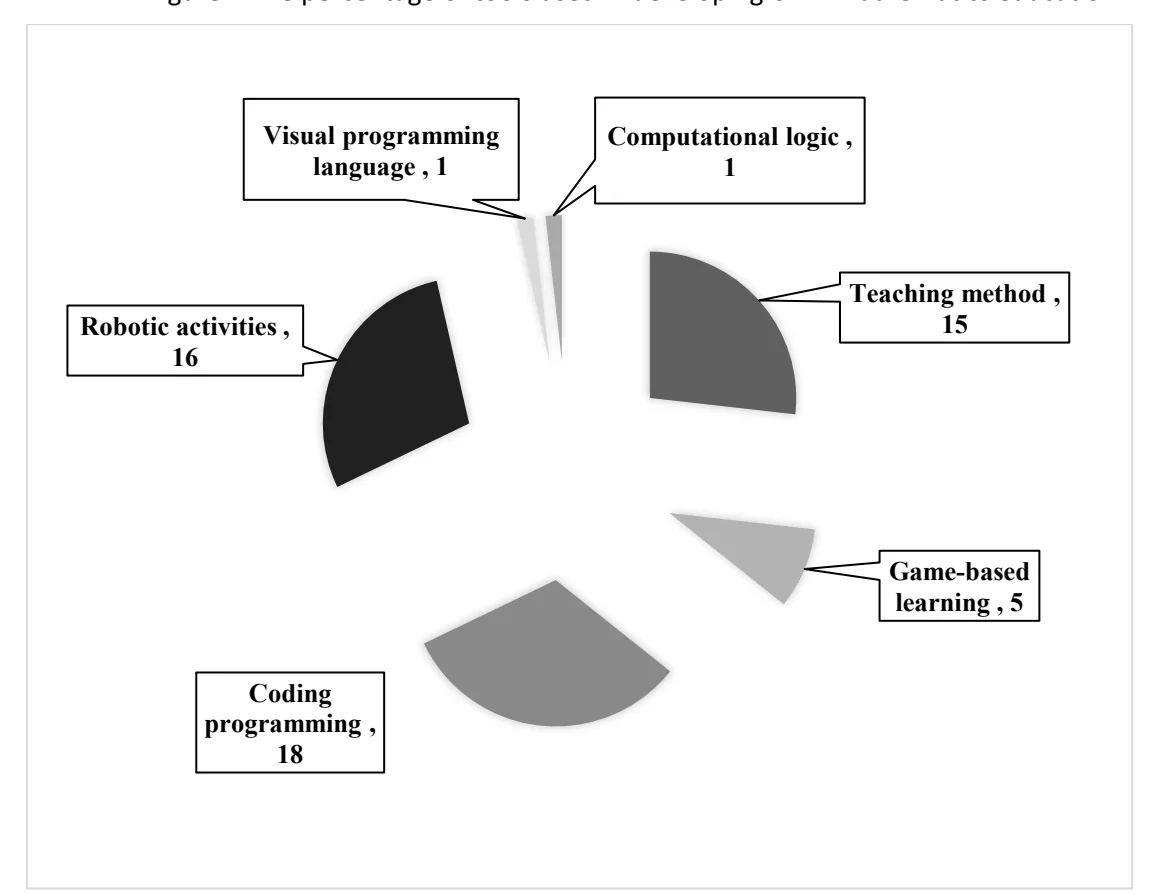
Figure 2 The percentage of tools used in developing CT in mathematics education
Table 3 The findings of the tools used in developing CT in mathematics education
| Tools | ||||||||
|---|---|---|---|---|---|---|---|---|
| No | Authors | Country / A = ASEAN NA = Non-ASEAN | Teaching method | Game-based learning | Coding programming | Robotics activities | Visual programming language | Computational logic |
| 1 | Cheng et al. (2017) | China (A) | √ | |||||
| 2 | Croff (2017) | USA (NA) | √ | |||||
| 3 | Jeng et al. (2020) | Taiwan (A) | √ | |||||
| 4 | Deng et al. (2020) | China(A) | √ | |||||
| 5 | Stewart et al. (2021) | Italy (NA) | √ | √ | ||||
| 6 | Menolli and Neto (2021) | Brazil (NA) | √ | √ | √ | √ | √ | |
| 7 | Rich et al. (2021) | USA (NA) | √ | √ | ||||
| 8 | Mouza et al. (2017) | USA (NA) | √ | |||||
| 9 | Quiterio Figueiredo (2017) | Portugal (NA) | √ | √ | ||||
| 10 | Jaipal-Jamani & Angeli (2017) | New York (NA) | √ | |||||
| 11 | Marcelino et al. (2018) | Portugal (NA) | √ | √ | ||||
| 12 | Matere et al. (2021) | Taiwan (A) | √ | |||||
| 13 | Hooshyar et al. (2021) | Europe (NA) | √ | |||||
| 14 | Rios Felix et al. (2020) | Mexico (NA) | √ | |||||
| 15 | Ioannou and Makridou (2018) | Not clearly mentioned | √ | |||||
| 16 | Özmutlu et al. (2021) | Turkey (A/NA) | √ | √ | ||||
| 17 | Merino-Armero et al. (2021) | Europe (NA) | √ | |||||
| 18 | Yildiz Durak (2020) | Turkey(A) | √ | √ | ||||
| 19 | Fang et al. (2017) | China (A) | √ | |||||
| 20 | Garcia Angarita et al. (2017) | South America (NA) | √ | |||||
| 21 | Sung & Black (2020) | New York (NA) | √ | √ | ||||
| 22 | Relkin et al. (2021) | USA (NA) | √ | √ | √ | |||
| 23 | Critten et al. (2021) | Switzerland/(NA) | √ | √ | √ | |||
| 24 | Piedade et al. (2020) | Portugal (NA) | √ | √ | ||||
| 25 | Coban and Korkmaz (2021) | Turkey (A) | √ | |||||
| 26 | Sun et al. (2021a, 2021b) | China (A) | √ | √ | ||||
| 27 | Mecca et al. (2021) | Italy (NA) | √ | √ |
| 28 | Tucker-Raymond et al. (2021) | USA (NA) | √ | |||
|---|---|---|---|---|---|---|
| 29 | Yi Wu and Yu Sheng (2021) | Taiwan (A) | √ | √ | ||
| 30 | Silva et al. (2021) | Portugal (NA) | √ | √ | ||
| 31 | Fanchamps et al. (2021) | Netherlands (NA) | √ | √ | ||
| 32 | Agbo et al. (2021) | Nigeria (NA) | √ | |||
| 33 | Ng and Cui (2021) | Hong Kong (A) | ||||
| 34 | Shorey et al. (2021) | USA (NA) | √ | √ | √ |
3.3. Tools used to develop CT in mathematics education
3.3.1. Teaching method
A total of 16 out of 34 studies concentrate primarily on the teaching method in developing CT abilities. The teaching method constitutes one of the largest percentages in developing CT in mathematics education, i.e., 47%. There were four studies performed in ASEAN countries (Cheng et al., 2017; Fang et al., 2017; Matere et al., 2021; Shorey et al., 2021) and 12 studies conducted in non-ASEAN countries (Çoban & Korkmaz, 2021; Critten et al., 2021; Jeng et al., 2020; Marcelino et al., 2018; Mecca et al., 2021; Menolli & Neto, 2021; Mouza et al., 2017; Quitério Figueiredo, 2017; Relkin et al., 2021; Rich et al., 2021; Sung & Black, 2020; Tucker-Raymond et al., 2021).
This systematic review explains various types of teaching methods used in developing CT in mathematics, such as instant communication (IM) teaching method (Cheng et al., 2017), innovative curriculum design relying on an Internet-of-Things (IoT) programming course (Jeng et al., 2020), project-based learning and problem-solving learning method (Menolli & Neto, 2021), BootUp's model teaching method (Rich et al., 2021), technological pedagogical content knowledge (TPACK) educational technology course (Mouza et al., 2017), pre-programming (CS0) course (Quitério Figueiredo, 2017), elearning course employing Moodle as a learning management system (Marcelino et al., 2018), designbased learning (Matere et al., 2021), blending learning flipped class (Fang et al., 2017), physical body movement practice (Sung & Black, 2020), coding as another language (CAL) curriculum (Relkin et al., 2021), guided play activities (Critten et al., 2021), online performance-based assessment (Çoban & Korkmaz, 2021) and procedural programming course (Mecca et al., 2021). This includes delegating responsibility to students, encouraging independent problem-solving among students, co-learning with students, fostering interdependence among students, offering a variety of additional resources (Tucker-Raymond et al., 2021) and digital making (DM) summer camp (Ng & Cui, 2021).
In ASEAN countries, four types of teaching methods were focused in enhancing CT in mathematics learning. They are IM tool teaching method, design-based learning, blending learning flipped class and DM summer camp. The teaching methods in developing CT involving design-based learning and blending learning flipped classes are only conducted in ASEAN countries such as China, Taiwan and Hong Kong. Statistically speaking, only China conducted research involving the IM tool as a teaching method in fostering CT. Meanwhile, in non-ASEAN countries, 12 different teaching methods were used to develop CT in mathematics education.
Besides that, 7 out of 12 studies used integration technology. They are the IoT programming course (Jeng et al., 2020), BootUp's model teaching method (Rich et al., 2021), TPACK educational technology course (Mouza et al., 2017), pre-programming (CS0) course (Quitério Figueiredo, 2017), elearning course employing Moodle as a learning management system (Marcelino et al., 2018), CAL curriculum and online performance-based assessment (Çoban & Korkmaz, 2021). According to the statistics, only 7 out of 12 studies included technological integration in mathematics education.
Cheng et al. (2017) studied the impact of IM education methods on Chinese students' CT. Moreover, Jeng et al. (2020) assessed the influence of enhancing students' motivation and CT ability in learning mathematics using an innovative curriculum design relying on the IoT programming course. Meanwhile, in Brazil, Menolli and Neto (2021) found a link between CT skills and project-based learning and problem-solving learning. Furthermore, Rich et al. (2021) used BootUp's professional model to assess and improve the degree of CT among mathematic teachers. Furthermore, by utilising a TRACK CT-infused educational technology course, Mouza et al. (2017) were able to assess developing CT skills among preschool instructors.
According to Marcelino et al. (2018), an e-learning course employing Moodle as a learning management system improves CT capacity among primary school mathematic teachers. Meanwhile, Matere et al. (2021) found that when design-based learning (DBL) was utilised as a teaching technique, students' CT skills improved. Not just because, but Fang et al. (2017) conducted a study to determine if there was a link between blending learning and CT skills in a flipped class teaching approach.
Students' learning styles and activities, in addition to their learning methods, are connected to their CT abilities. Sung and Black (2020) examined the relationship between the physical body movement exercise of the students as well as their CT abilities. Physical body movement activities are predictors of CT abilities in fourth-grade students in New York, according to the findings. In Switzerland, Critten et al. (2021) investigated the emotional link between preschool children and CT abilities and classroom activities. According to the findings, directed play activities can successfully improve students' CT abilities.
Moreover, Relkin et al. (2021) created and implemented a coding curriculum (CAL) to facilitate students enhance their CT skills. Moreover, Mecca et al. (2021) anticipated that the curriculum teaching method innovation will have a good influence on the outcome. He used a procedural programming course to help students improve their CT skills in learning mathematics. A short-term course or camp can modify not only the curriculum, but also the abilities of participants. Ng and Cui (2021) demonstrated this by introducing the DM summer camp to help students improve CT abilities.
CT has been thoroughly tested in higher education as well as at the primary level. Quiterio Figueiredo (2017) determined that taking a pre-programming course (CS0) enhances CT skills among engineering students. Other Turkish researchers (Çoban & Korkmaz, 2021) focused on strengthening CT skills among high school students using an online performance-based education technique.
3.3.2. Coding programming
A total of 16 out of 34 studies concentrate primarily on coding programming in enhancing CT. The coding programme constituted the largest percentage (47%) in developing CT in education, which is the same percentage as the teaching method. There were 3 studies conducted in ASEAN countries (Deng et al., 2020; Sun et al., 2021a; Yi Wu & Yu Sheng, 2021) and 13 studies in non-ASEAN countries (Critten et al., 2021; Marcelino et al., 2018; Mecca et al., 2021; Ozmutlu et al., 2021; Piedade et al., 2020; Quiterio Figueiredo, 2017; Relkin et al., 2021; Rich et al., 2021; Rios Felix et al., 2020; Shorey et al., 2021; Silva et al., 2021; Sung & Black, 2020; Yildiz Durak, 2020).
This systematic review demonstrates how non-ASEAN nations used coding programming as a method to create CT more efficiently. This indicates that non-ASEAN nations carried out 82% of the studies in ASEAN countries. The usefulness of coding programming to enhance CT abilities has been examined in 13 researches in non-ASEAN countries (Critten et al., 2021; Marcelino et al., 2018; Mecca et al., 2021; Ozmutlu et al., 2021; Piedade et al., 2020; Quiterio Figueiredo, 2017; Relkin et al., 2021; Rich et al., 2021; Rios Felix et al., 2020; Shorey et al., 2021; Silva et al., 2021; Sung & Black, 2020; Yildiz Durak, 2020).
Using coding programming, such as scratch programming (Marcelino et al., 2018; Shorey et al., 2021; Sung & Black, 2020; Yildiz Durak, 2020), improves CT ability. Meanwhile, BootUp's coding (Rich
et al., 2021), hour of code (Quiterio Figueiredo, 2017), EasyLogic 3D (Rios Felix et al., 2020), intensive coding (Ozmutlu et al., 2021), computational thinking test (CTt) for beginners (BCTt) and TechCheck (Relkin et al., 2021), basic coding (Critten et al., 2021; Piedade et al., 2020), ACME 'Code Animation by Evolved Metaphors' (Mecca et al., 2021) and block programming activities (Silva et al., 2021) were used in developing CT skills. Furthermore, visual basics and pencil code (Deng et al., 2020), unplugged programming activities (Sun et al., 2021a, 2021b) and visual programming environments (Yi Wu & Yu Sheng, 2021) have all demonstrated to be helpful in improving CT skills in two ASEAN nations.
3.3.3. Robotic activities
A total of 14 out of 34 studies looked at robotic activities as a way to improve CT. The robotic activities constitute the second largest percentage (41%) in developing CT in education. There were only 2 studies conducted in ASEAN countries (Sun et al., 2021a, 2021b; Yi Wu & Yu Sheng, 2021) and 12 researches conducted in non-ASEAN countries (Critten et al., 2021; Fanchamps et al., 2019; Garcia Angarita et al., 2017; Ioannou & Makridou, 2018; Jaipal-Jamani & Angeli, 2017; Menolli & Neto, 2021; Merino-Armero et al., 2021; Ozmutlu et al., 2021; Piedade et al., 2020; Relkin et al., 2021; Silva et al., 2021; Stewart et al., 2021).
This comprehensive research reveals how non-ASEAN countries employed robotic operations to produce CT skills better effectively. Meanwhile, CT skills in collaborative robotics activities (Stewart et al., 2021), robotics activities in education (Ioannou & Makridou, 2018; Menolli & Neto, 2021; Silva et al., 2021), LEGO® WeDo robotics kits (Fanchamps et al., 2019; Jaipal-Jamani & Angeli, 2017), intensive coding course (Critten et al., 2021; Ozmutlu et al., 2021; Piedade et al., 2020), robotics club and course (Garcia Angarita et al., 2017; Yi Wu & Yu Sheng, 2021), BCTt and TechCheck (Relkin et al., 2021) and school extracurricular robotics activities (Merino-Armero et al., 2021) were used as effective tools in enhancing CT abilities. Unplugged programming exercises (Sun et al., 2021a, 2021b) and physical robot courses (Yi Wu & Yu Sheng, 2021) have also been shown to assist and improve CT skills in two ASEAN countries.
3.3.4. Game-based learning
Four of the 34 studies looked at game-based learning to improve CT. In developing CT in education, game-based learning accounts for just 11% of the total. In non-ASEAN nations, four studies were carried out (Agbo et al., 2021; Croff, 2017; Hooshyar et al., 2021; Menolli & Neto, 2021).
Croff (2017) investigated the effect of the scalable game design (SGD) and ITEST uGameiCompute project on students' CT in the USA. The results showed development in CT skills of students and their motivation level. Moreover, Menolli and Neto (2021) established game-based learning for teacher training course students in Brazil. The computer science teacher was able to develop their CT skills by game-based learning. Meanwhile, Agbo et al. (2021) found a relationship between online codesign (OCD) game-based learning and CT skills. Furthermore, Hooshyar et al. (2021) used AutoThinking game evaluates and improves the degree of CT among students.
3.3.5. Visual programming language and computational logic
One of the 34 studies looked at the use of visual programming languages and computational logic to enhance CT. Visual programming language and computational logic make up just 2% of the total in the development of CT in education. This study was carried out in Brazil (Menolli & Neto, 2021). Menolli and Neto (2021) assessed the effect of the computational logic project and visual programming language on students' CT. The results showed development in CT skills of students and their motivation level.
3.3.6. Country with the most research on CT abilities in mathematics education
In fact, there are 15 countries involved in this review. According to the study, the United States has conducted the most CT research in mathematics. In terms of quantity, six studies have been conducted in the United States.
Similarly, four studies were conducted in China and Portugal. Taiwan and Turkey organised three studies to strengthen CT in mathematics instruction at the next level. Meanwhile, just one study involving CT in mathematics instruction has been conducted in seven countries: Mexico, Brazil, South America, Switzerland, the Netherlands, Nigeria and Hong Kong. Figure 4 shows findings on CT in mathematics education research according to list of countries.
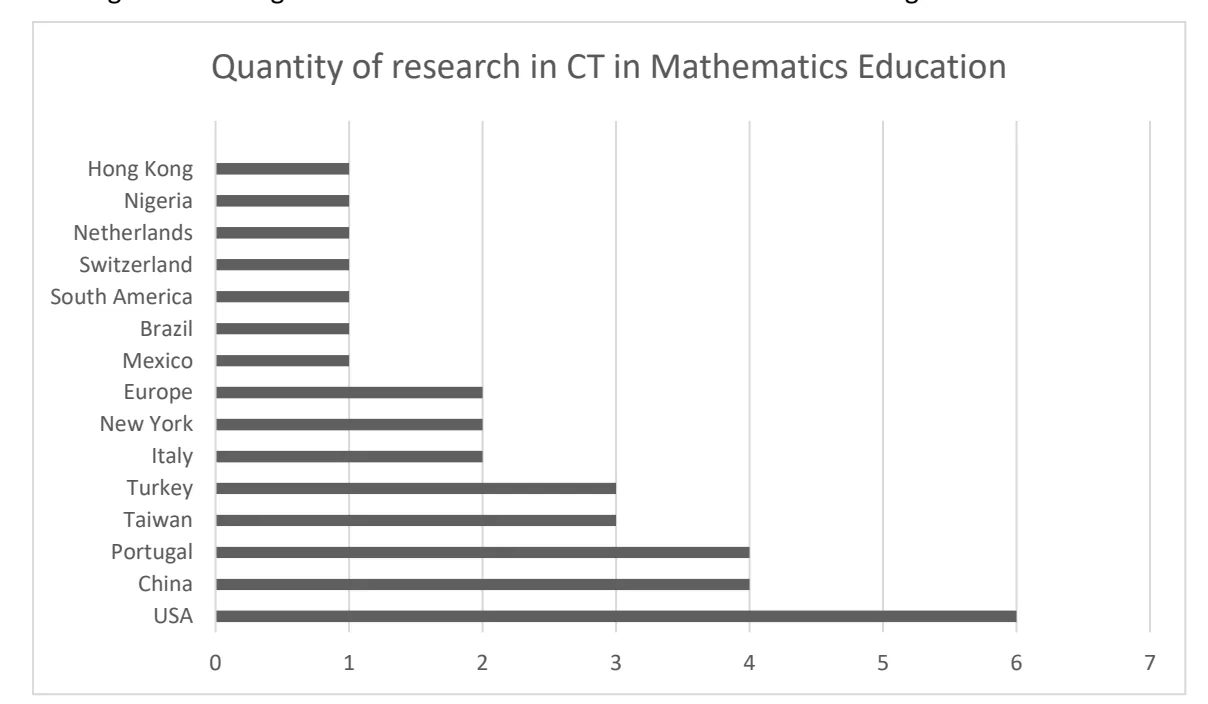
Figure 4. Findings on CT in mathematics education research according to the list of countries
3.3.7. Regions where more studies were conducted
From the data taken in this study, it can be concluded that non-ASEAN countries are conducting more research than ASEAN countries. Based on the articles selected in this study, only 32% of ASEAN countries conducted research to improve CT in mathematics education. Meanwhile, non-ASEAN countries account for the remaining 68%. Figure 5 shows the findings on CT in mathematics education research according to list of countries.
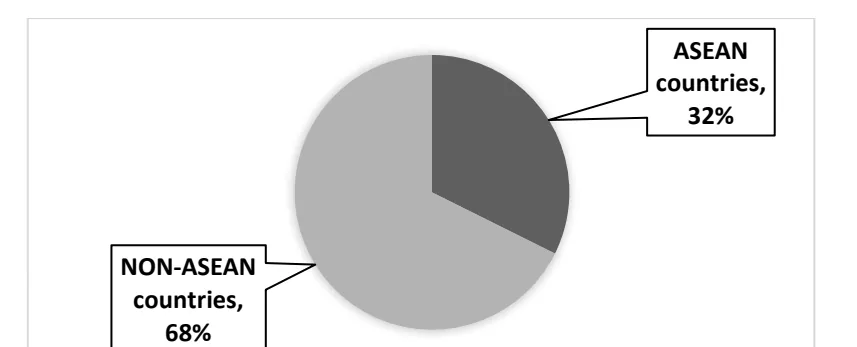
Figure 5. The percentage of CT in mathematics education research in ASEAN and non-ASEAN countries
4. Discussion
From the analysis of the studies, it is possible to infer the growing interest among researchers in exploring the relationship between mathematics education and CT. The number of studies related to CT in mathematics presented and experimentally assessed has increased significantly in recent years, contributing to this result. In this research, various types of tools in mathematics education might be used to improve CT abilities. However, in the development of CT, there are six main tools that are user pleasant among teachers and students.
The six main tools are game-based learning, coding programming, robotics activities, visual programming language, computational logic and the teaching method used by teachers. The coding programming and robotic activities approach are the most useful among the six tools. This signifies that both the teachers and the students utilise this strategy to develop CT abilities in mathematics education. This review also informs us that CT research is growing increasingly popular, with teachers being the primary beneficiaries. Furthermore, in comparison to prior years, the number of present researchers is quite large.
This article's findings will also be extremely beneficial to teachers. It can provide a clear image of the most effective strategy or tools to utilise to quickly increase CT abilities in mathematics education. Moreover, the best strategies in teaching CT abilities in mathematics education are coding programming and robotics activities. According to the findings of this study, ASEAN countries have the least research on CT capabilities in school. This demonstrates the ASEAN nations' commitment to closing the gap in CT abilities in mathematics education.
It also demonstrates that there is still a need to improve CT abilities in schools in ASEAN countries. From the analysis of the studies, it is possible to infer the growing interest among researchers in exploring the relationship between mathematics education and CT. The number of studies CT in mathematics presented and experimentally assessed has increased significantly in recent years, contributing to this result.
5. Conclusion
For the present six years research period, this systematic review examined 34 papers based on tools used to improve CT abilities in mathematics education. Here, the year of publication demonstrates a rise in CT-related articles in mathematics, particularly after the year 2019. This demonstrates that the significance of CT in mathematics education has been recognised. The researchers' efforts from the United States, Portugal as well as China are primarily responsible for these huge gains and maintained strong national and international collaboration connections. This systematic review focuses on the tools fostering CT skills in mathematics education.
Based on systematic reviews, it was found that the most popular tools used to develop CT ability, according to the findings of this study, are coding programmes and robotics activities. Different teaching tools that include CT in the pedagogical material possess a crucial role in the establishment of CT skills in mathematics education. Furthermore, the results of this study reveal that non-ASEAN nations conducted most of the research on CT. This collaboration between scholars can be stated to be mostly focused on a national or neighbouring country level. This is because CT abilities in mathematics education in ASEAN nations are currently lacking. CT capabilities in ASEAN nations must be strengthened in order to prepare the country for industrialised countries. This is due to the fact that CT abilities are at the heart of science, technology, engineering and mathematics (STEM).
In light of the findings of this research, it will be required to undertake more research that incorporates the findings. First, there are certain tools that are frequently used to improve CT abilities in mathematics education. However, coding programming was the most popular among the programming tools employed to facilitate students to enhance their CT abilities in learning mathematics. It may be possible to use a larger variety of technologies and software in future studies
to help in the development of CT abilities in mathematics education.
6. Recommendations
This systematic study gives information on CT abilities in mathematics education. These findings have important implication for policymakers and educators. As a result, more thorough investigation must be performed in the near future to tackle the obstacles blocking the improvement of CT abilities in mathematics instruction. It may be possible to determine if these tools have a direct influence on improving CT ability in mathematics or whether they operate as moderators or mediators.
A larger database can also be used to provide further progress in future studies. It is expected that this study would spark further research to improve these abilities, especially in Malaysia and in the mathematics field.
Acknowledgement
This research was financed by grant GG-2020-026 from the Faculty of Education, Universiti Kebangsaan Malaysia (UKM).
References
-
Abdullah, A. H., Othman, M. A., Ismail, N., Rahman, S. N. S. A., Mokhtar, M., & Zaid, N. M. (2019). Development of mobile application for the concept of pattern recognition in computational thinking for mathematics subject. TALE 2019 - 2019 IEEE International Conference on Engineering, Technology and Education. https://doi.org/10.1109/TALE48000.2019.9225910
-
Agbo, F. J., Oyelere, S. S., Suhonen, J., & Laine, T. H. (2021). Co-design of mini games for learning computational thinking in an online environment.Education and Information Technologies, 26(5*)* https://doi.org/10.1007/s10639-021-10515-1
-
Arık, M., & Topçu, M. S. (2022). Computational thinking integration into science classrooms: Example of digestive system. Journal of Science Education and Technology, 31(1), 99–115. https://doi.org/10.1007/s10956-021-09934-z
-
Basu, S., Biswas, G., & Kinnebrew, J. S. (2017). Learner modeling for adaptive scaffolding in a computational thinking-based science learning environment. User Modeling and User-Adapted Interaction, 27(1), 5–53. https://doi.org/10.1007/s11257-017-9187-0
-
Cheng, Z.-M., Li, X., & Li, R. (2017). Multi-dimensional teaching reform on basic courses of college computer targeted at cultivating computation thinking. DEStech Transactions on Social Science, Education and Human Science, 3(mess), 626–629. https://doi.org/10.12783/dtssehs/mess2017/12194
-
Çoban, E., & Korkmaz, Ö. (2021). An alternative approach for measuring computational thinking: Performance-based platform. Thinking Skills and Creativity, 42. https://doi.org/https://doi.org/10.1016/j.tsc.2021.100929
-
Critten, V., Hagon, H., & Messer, D. (2021). Can preschool children learn programming and coding through guided play activities? A case study in computational thinking. Early Childhood Education Journal, 0123456789. https://doi.org/10.1007/s10643-021-01236-8
-
Croff, C. H. (2017). Emerging research, practice, and policy on computational thinking. Emerging Research, Practice, and Policy on Computational Thinking, 1(11), 175–188. https://doi.org/10.1007/978-3-319-52691-1
-
Deng, W., Pi, Z., Lei, W., Zhou, Q., & Zhang, W. (2020). Pencil code improves learners' computational thinking and computer learning attitude. Computer Applications in Engineering Education, 28(1), 90–104. https://doi.org/10.1002/cae.22177
-
Fanchamps, N. L. J. A., Slangen, L., Hennissen, P., & Specht, M. (2019). The influence of SRA programming on algorithmic thinking and self-efficacy using lego robotics in two types of instruction. International Journal of Technology and Design Education, 31(2), 203–222. https://doi.org/10.1007/s10798-019-09559-9
-
Fang, A. D., Chen, G. L., Cai, Z. R., Cui, L., & Harn, L. (2017). Research on blending learning flipped class model in colleges and universities based on computational thinking - "Database principles" for example. Eurasia Journal of Mathematics, Science and Technology Education, 13(8), 5747–5755. https://doi.org/10.12973/eurasia.2017.01024a
-
García Angarita, M., Deco, C., & Collazos Collazos, C. (2017). Robotics based strategies to support computational thinking: The case of the pascual bravo industrial technical institute. Journal of Computer Science and Technology, 17(01), 59–67. https://www.redalyc.org/pdf/6380/638067255007.pdf
-
Grover, S., & Pea, R. (2017). Computational thinking: A competency whose time has come. Computer Science Education, December. https://doi.org/10.5040/9781350057142.ch-003
-
Hooshyar, D., Pedaste, M., Yang, Y., Malva, L., Hwang, G. J., Wang, M., Lim, H., & Delev, D. (2021). From gaming to computational thinking: An adaptive educational computer game-based learning approach. Journal of Educational Computing Research, 59(3), 383–409. https://doi.org/10.1177/0735633120965919
-
Ioannou, A., & Makridou, E. (2018). Exploring the potentials of educational robotics in the development of computational thinking: A summary of current research and practical proposal for future work. Education and Information Technologies, 23(6), 2531–2544. https://doi.org/10.1007/s10639- 018-9729-z
-
Jaipal-Jamani, K., & Angeli, C. (2017). Effect of robotics on elementary preservice teachers' selfefficacy, science learning, and computational thinking. Journal of Science Education and Technology, 26(2), 175–192. https://doi.org/10.1007/s10956-016-9663-z
-
Jeng, Y. L., Lai, C. F., Huang, S. B., Chiu, P. S., & Zhong, H. X. (2020). To cultivate creativity and a maker mindset through an internet-of-things programming course. Frontiers in Psychology, 11(July), 1– 11. https://doi.org/10.3389/fpsyg.2020.01572
-
Kraus, S., Breier, M., & Dasí-Rodríguez, S. (2020). The art of crafting a systematic literature review in entrepreneurship research. International Entrepreneurship and Management Journal, 16(3), 1023–1042. https://doi.org/10.1007/s11365-020-00635-4
-
Lin, S. Y., Chien, S. Y., Hsiao, C. L., Hsia, C. H., & Chao, K. M. (2020). Enhancing computational thinking capability of preschool children by game-based smart toys. Electronic Commerce Research and Applications, 44, 101011. https://doi.org/10.1016/j.elerap.2020.101011
-
Liu, H., Wu, Z., Lu, Y., & Lu, Y. (2022). Exploring the balance between computational thinking and learning motivation in elementary programming education: An empirical study with game-based learning. IEEE Transactions on Games. https://doi.org/10.1109/TG.2022.3143701.
-
Lye, S. Y., & Koh, J. H. L. (2014). Review on teaching and learning of computational thinking through programming: What is next for K-12? Computers in Human Behavior, 41, 51–61. https://doi.org/10.1016/j.chb.2014.09.012
-
Marcelino, M. J., Pessoa, T., Vieira, C., Salvador, T., & Mendes, A. J. (2018). Learning computational
-
thinking and scratch at distance. Computers in Human Behavior, 80, 470–477. https://doi.org/10.1016/j.chb.2017.09.025
-
Matere, I. M., Weng, C., Astatke, M., Hsia, C. H., & Fan, C. G. (2021). Effect of design-based learning on elementary students computational thinking skills in visual programming maker course. Interactive Learning Environments, 0(0), 1–14. https://doi.org/10.1080/10494820.2021.1938612
-
Mecca, G., Santoro, D., Sileno, N., & Veltri, E. (2021). Diogene-CT: tools and methodologies for teaching and learning coding. International Journal of Educational Technology in Higher Education, 18(1), 1–26. https://doi.org/10.1186/s41239-021-00246-1
-
Menolli, A., & Neto, J. C. (2021). Computational thinking in computer science teacher training courses in Brazil: A survey and a research roadmap. Education and Information Technologies, 0123456789. https://doi.org/10.1007/s10639-021-10667-0
-
Merino-Armero, J. M., González-Calero, J. A., & Cózar-Gutiérrez, R. (2021). The effect of after-school extracurricular robotic classes on elementary students' computational thinking. Interactive Learning Environments, 0(0), 1–12. https://doi.org/10.1080/10494820.2021.1946564
-
Morris, D., Uppal, G., & Wells, D. (2020). Teaching computational thinking and coding in primary schools. Teaching Computational Thinking and Coding in Primary Schools, 11913(1), 1–24. https://doi.org/10.4135/9781529714647
-
Mouza, C., Yang, H., Pan, Y., Ozden, S. Y., & Pollock, L. (2017). Resetting educational technology coursework for pre-service teachers: A computational thinking approach to the development of technological pedagogical content knowledge (TPACK). Australasian Journal of Educational Technology, 33(3), 61–76. https://doi.org/https://doi.org/10.14742/ajet.3521 76
-
Ng, O. L., & Cui, Z. (2021). Examining primary students' mathematical problem-solving in a programming context: towards computationally enhanced mathematics education. ZDM - Mathematics Education, 53(4), 847–860. https://doi.org/10.1007/s11858-020-01200-7
-
Nouri, J., Zhang, L., Mannila, L., & Norén, E. (2020). Development of computational thinking, digital competence and 21st century skills when learning programming in K-9. Education Inquiry, 11(1), 1–17. https://doi.org/10.1080/20004508.2019.1627844
-
Özmutlu, M., Atay, D., & Erdoğan, B. (2021). Collaboration and engagement based coding training to enhance children's computational thinking self-efficacy. Thinking Skills and Creativity, 40(November 2020). https://doi.org/10.1016/j.tsc.2021.100833
-
Page, M. J., McKenzie, J. E., Bossuyt, P. M., Boutron, I., Hoffmann, T. C., Mulrow, C. D., Shamseer, L., Tetzlaff, J. M., Akl, E. A., Brennan, S. E., Chou, R., Glanville, J., Grimshaw, J. M., Hróbjartsson, A., Lalu, M. M., Li, T., Loder, E. W., Mayo-Wilson, E., McDonald, S., … Moher, D. (2021). The PRISMA 2020 statement: An updated guideline for reporting systematic reviews. The BMJ, 372. https://doi.org/10.1136/bmj.n71
-
Papert, S. A. (1980). Mindstorms: Children, Computers, And Powerful Ideas*.* Basic Books. https://dl.acm.org/doi/10.5555/1095592
-
Papert, S. (1996). An exploration in the space of mathematics educations. International Journal of Computers for Mathematical Learning, 1(1), 95–123. https://doi.org/10.1007/BF00191473
-
Pei, C. (Yu), Weintrop, D., & Wilensky, U. (2018). Cultivating computational thinking practices and mathematical habits of mind in lattice land. Mathematical Thinking and Learning, 20(1), 75–89. https://doi.org/10.1080/10986065.2018.1403543
-
Piedade, J., Dorotea, N., Pedro, A., & Matos, J. F. (2020). On teaching programming fundamentals and computational thinking with educational robotics: A didactic experience with pre-service
-
teachers. Education Sciences, 10(9), 1–15. https://doi.org/10.3390/educsci10090214
-
Polat, E., Hopcan, S., Kucuk, S., & Sisman, B. (2021). A comprehensive assessment of secondary school students' computational thinking skills. British Journal of Educational Technology, 52(5), 1965– 1980. https://doi.org/10.1111/bjet.13092
-
Quitério Figueiredo, J. A. (2017). How to improve computational thinking: A case study. Education in the Knowledge Society (EKS), 18(4), 35-51–51. https://doi.org/10.14201/eks20171843551
-
Relkin, E., de Ruiter, L. E., & Bers, M. U. (2021). Learning to code and the acquisition of computational thinking by young children. Computers and Education, 169(April), 104222. https://doi.org/10.1016/j.compedu.2021.104222
-
Rich, P. J., Mason, S. L., & O'Leary, J. (2021). Measuring the effect of continuous professional development on elementary teachers' self-efficacy to teach coding and computational thinking. Computers and Education, 168(November 2020), 104196. https://doi.org/10.1016/j.compedu.2021.104196
-
Ríos Félix, J. M., Zatarain Cabada, R., & Barrón Estrada, M. L. (2020). Teaching computational thinking in Mexico: A case study in a public elementary school. Education and Information Technologies, 25(6), 5087–5101. https://doi.org/10.1007/s10639-020-10213-4
-
Shorey, S., Hill, B. M., & Woolley, S. (2021). From hanging out to figuring it out: Socialising online as a pathway to computational thinking. New Media and Society, 23(8), 2327–2344. https://doi.org/10.1177/1461444820923674
-
Sierra-Correa, P. C., & Cantera Kintz, J. R. (2015). Ecosystem-based adaptation for improving coastal planning for sea-level rise: A systematic review for mangrove coasts. Marine Policy, 51, 385–393. https://doi.org/10.1016/j.marpol.2014.09.013
-
Silva, R., Fonseca, B., Costa, C., & Martins, F. (2021). Fostering computational thinking skills: A didactic proposal for elementary school grades. Education Sciences, 11(9). https://doi.org/https://doiorg.ezplib.ukm.my/10.3390/educsci11090518
-
Siong, W. W., & Kamisah, O. (2018). Pembelajaran berasaskan permainan dalam pendidikan stem dan penguasaan kemahiran abad ke-21. Politeknik & Kolej Komuniti Journal of Social Sciences and Humanities, 3, 128–135. https://myjms.mohe.gov.my/index.php/PMJSSH/article/view/4678
-
Stewart, W. H., Baek, Y., Kwid, G., & Taylor, K. (2021). Exploring factors that influence computational thinking skills in elementary students' collaborative robotics. Journal of Educational Computing Research, 59(6), 1208–1239. https://doi.org/10.1177/0735633121992479
-
Sun, L., Hu, L., & Zhou, D. (2021). Improving 7th-graders' computational thinking skills through unplugged programming activities: A study on the influence of multiple factors. Thinking Skills and Creativity, 42. https://doi.org/https://doi.org/10.1016/j.tsc.2021.100926
-
Sun,Hu, L., & Zhou, D. (2021b). Which way of design programming activities is more effective to promote K-12 students' computational thinking skills? A meta-analysis. Journal of Computer Assisted Learning, 37(4), 1048–1062. https://doi.org/10.1111/jcal.12545
-
Sung, W., & Black, J. B. (2020). Factors to consider when designing effective learning: Infusing computational thinking in mathematics to support thinking-doing. Journal of Research on Technology in Education, 53(4), 404–426. https://doi.org/10.1080/15391523.2020.1784066
-
Tasso, S., Gervasi, O., Locchi, A., & Sabbatini, F. (2019). Hahai : Computational thinking in primary school. International Conference on Computational Science and Its Applications ICCSA 2019, Lecture No, 287–298. https://doi.org/10.1007/978-3-030-24296-1
-
Tucker-Raymond, E., Cassidy, M., & Puttick, G. (2021). Science teachers can teach computational thinking through distributed expertise. Computers & Education, 173(104284). https://doi.org/https://doi.org/10.1016/j.compedu.2021.104284
-
Wing, J. M. (2006). Computational thinking. Communications of the ACM, Vol.49(3), 33–35. https://www.cs.cmu.edu/~15110-s13/Wing06-ct.pdf
-
Yi Wu, S., & Sheng Su. (2021). Visual programming environments and computational thinking performance of fifth- and sixth-grade students. Journal of Educational Computing Research, 59(6), 1075–1092. https://doi.org/10.1177/0735633120988807
-
Yildiz Durak, H. (2020). The effects of using different tools in programming teaching of secondary school students on engagement, computational thinking and reflective thinking skills for problem solving. Technology, Knowledge and Learning, 25(1), 179–195. https://doi.org/10.1007/s10758- 018-9391-y